

Novel Study illustrations
Welcome! I hope you are enjoying Bestsellers: Excavating the Tools and Techniques of Successful Novels. All of the illustrations from Book 2 are collected here, for easy browsing and magnifying, alongside complete alt text.
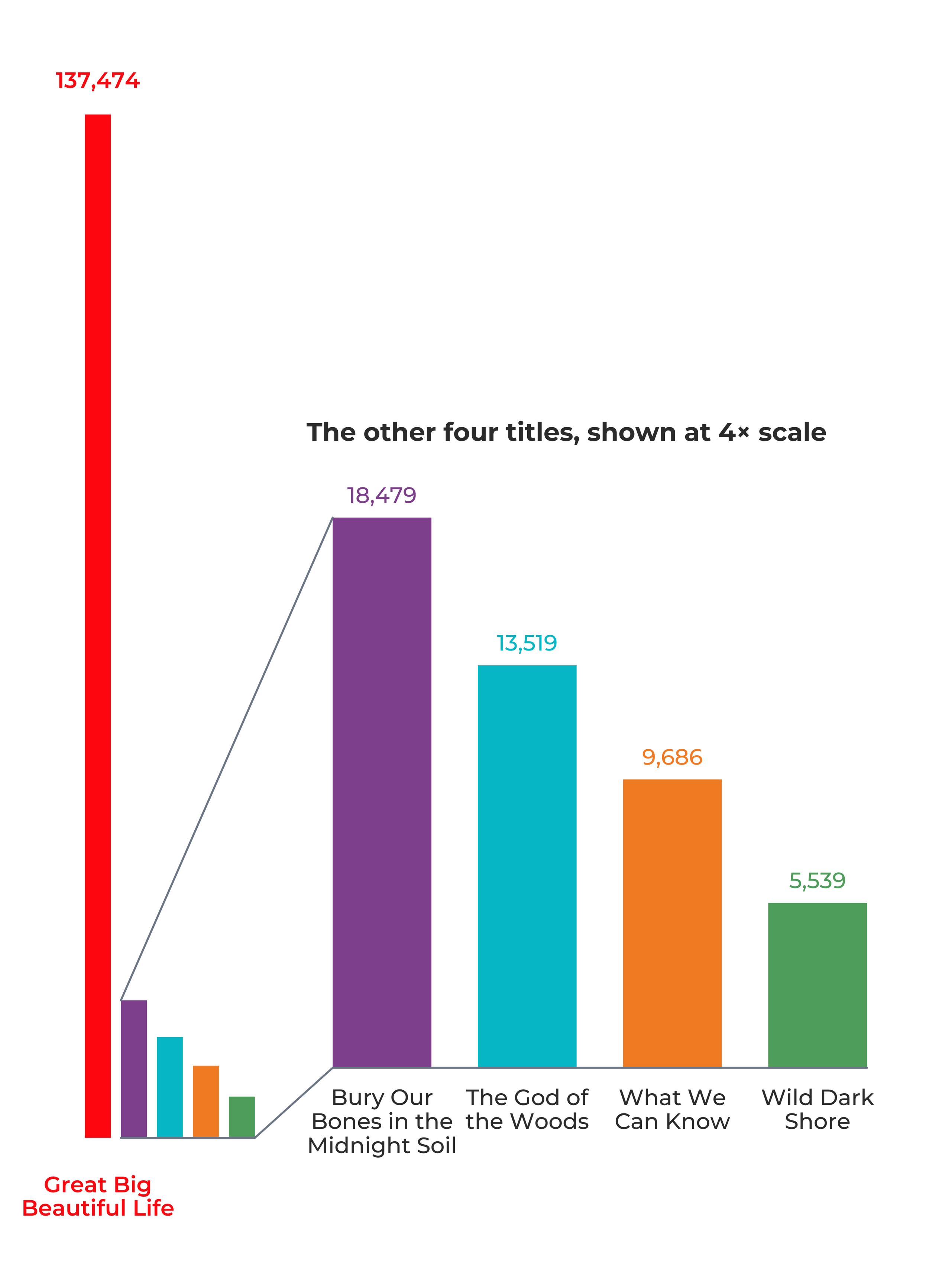
Figure 1: Highest weekly sales for five 2025 bestsellers
Caption: Great Big Beautiful Life is such an outlier, I needed to magnify the rest of the examples to make them visible.
Alt text: A bar chart of the highest single-week sales for five 2025 bestsellers. One tall red bar for Great Big Beautiful Life, labeled 137,474, towers over four tiny bars beside it; an inset magnifies those four at 4× scale: Bury Our Bones in the Midnight Soil at 18,479, The God of the Woods at 13,519, What We Can Know at 9,686, and Wild Dark Shore at 5,539. Even among bestsellers, Great Big Beautiful Life is an outlier, selling roughly twenty-five times more in its best week than Wild Dark Shore.
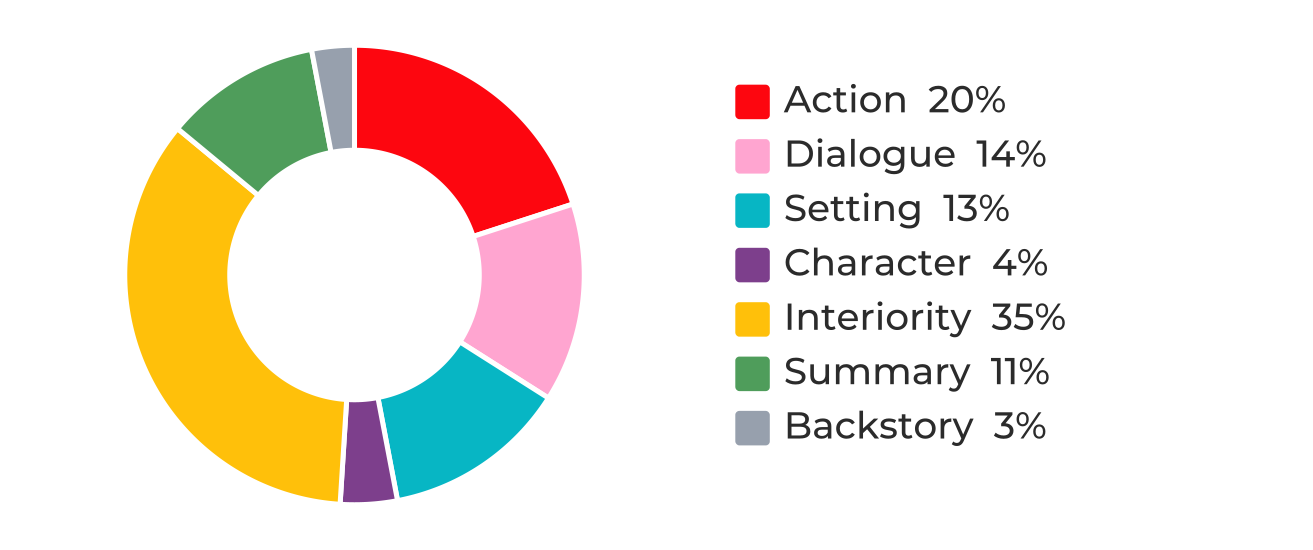
Figure 2: Scene components in The God of the Woods, chapter six
Caption: Action, dialogue, and setting are “showing” components that often cluster together.
Alt text: A donut chart of scene components in chapter six of The God of the Woods, with a legend giving the share of each component. Interiority is the largest slice at 35 percent, followed by action at 20 percent, dialogue at 14 percent, setting at 13 percent, summary at 11 percent, character description at 4 percent, and backstory at 3 percent. Together the showing components—action, dialogue, and setting—make up nearly half the chapter, while interiority alone claims more than a third.

Figure 3: Scene texture of The God of the Woods, chapter six
Caption: Notice that interiority can be delivered in large chunks or as short snippets woven in between dialogue and action.
Alt text: A full-page color-coded rendering of chapter six of The God of the Woods, laid out as four text pages under a heading with Louise’s name, every phrase drawn as a row of dots colored by scene component: red for action, pink for dialogue, turquoise for setting, purple for character, yellow for interiority, green for summary, and gray for backstory. Letters A through F mark passages discussed in the text: A is a solid yellow block of interiority near the opening, B a long green stretch of summary, C a mix of setting and backstory, D and E alternating bands of pink dialogue and red action with yellow interiority threaded between them, and F a short final page mixing backstory, action, dialogue, and interiority. Interiority arrives both as large uninterrupted chunks and as short snippets woven between dialogue and action.
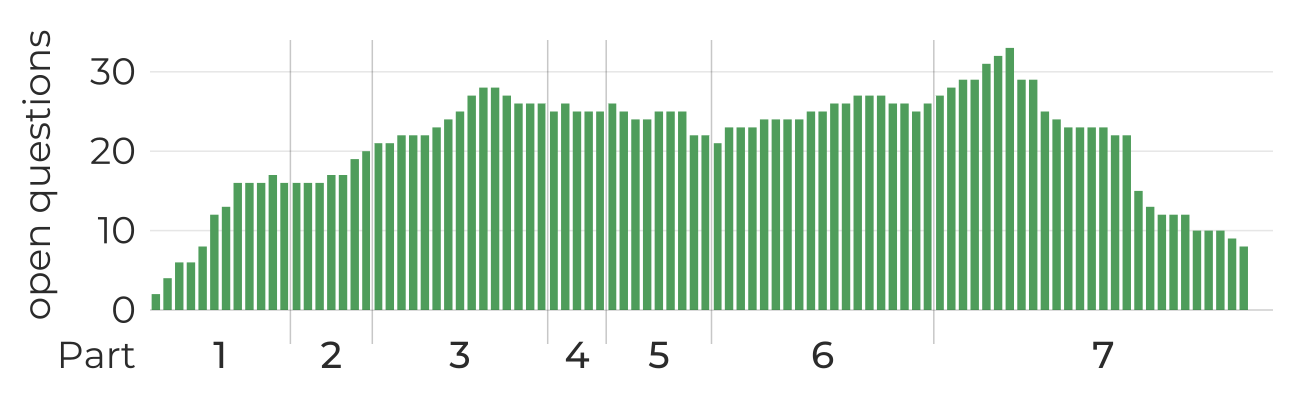
Figure 4: Number of open story questions per chapter in The God of the Woods
Caption: The height of the bar tracks the total number of questions open in each chapter.
Alt text: A bar graph of the number of open story questions in each chapter of The God of the Woods, with one bar per chapter and vertical lines dividing the novel into seven parts. The count climbs from about two open questions in the first chapter to the high twenties by the middle of part three, dips slightly through parts four and five, then rises again through part six to a peak above thirty early in part seven. In the final chapters the bars drop in a step-like pattern to under ten as groups of related questions are answered together.
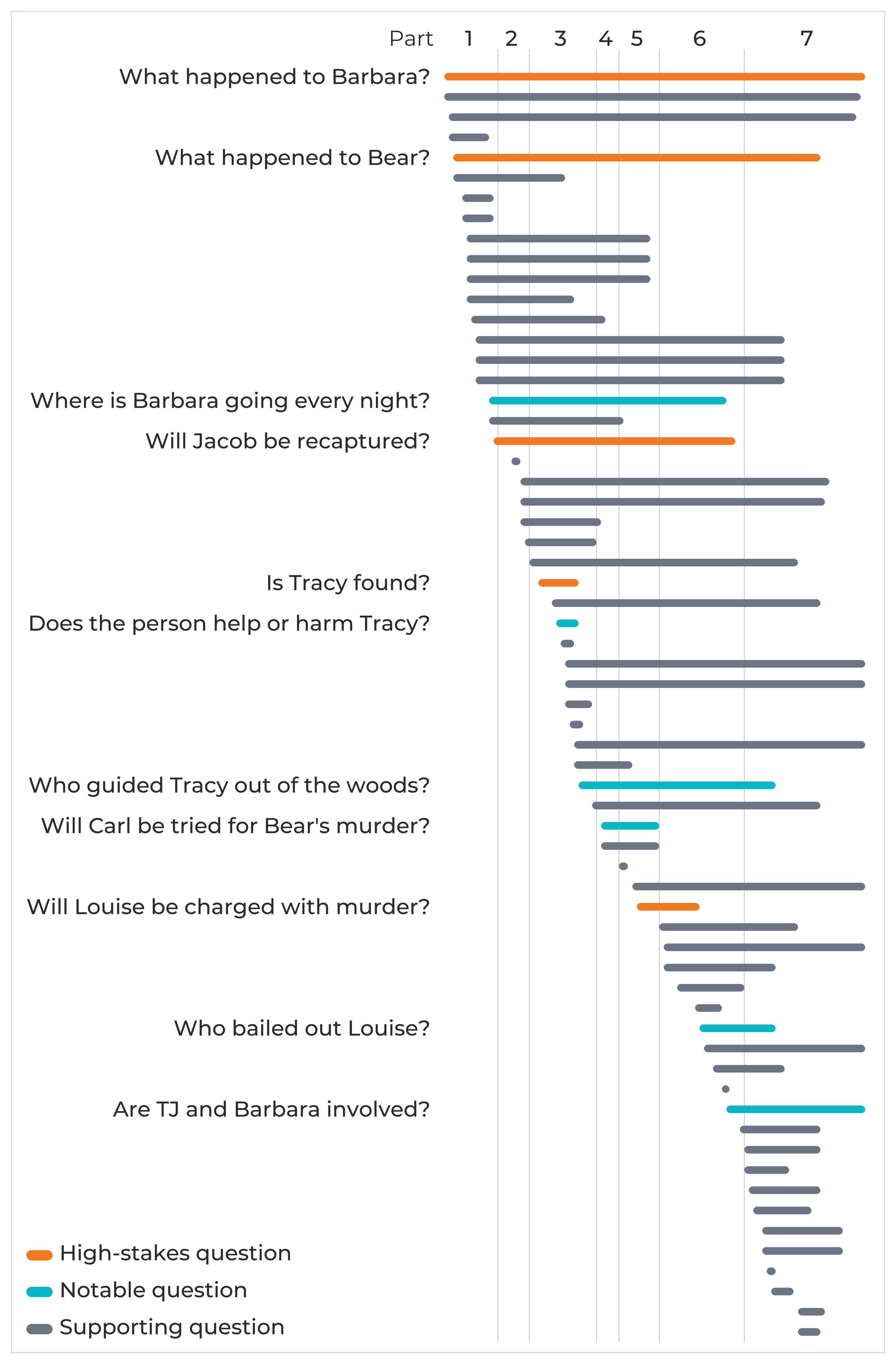
Figure 5: Rhythm of opening and closing story questions in The God of the Woods
Caption: Each bar is one of sixty-three story questions, showing when it opens and closes.
Alt text: A timeline chart of the sixty-three story questions in The God of the Woods, one horizontal bar per question, stacked in the order they open and set against the novel’s seven parts. Orange bars mark the high-stakes questions—What happened to Barbara? and What happened to Bear? span nearly the whole book, joined later by Will Jacob be recaptured?, Is Tracy found?, and Will Louise be charged with murder?—while turquoise bars mark notable mid-level questions and gray bars the many short supporting ones. New questions keep opening at regular intervals through the middle of the novel, and even in part seven a cascade of short new questions opens as the older ones close.
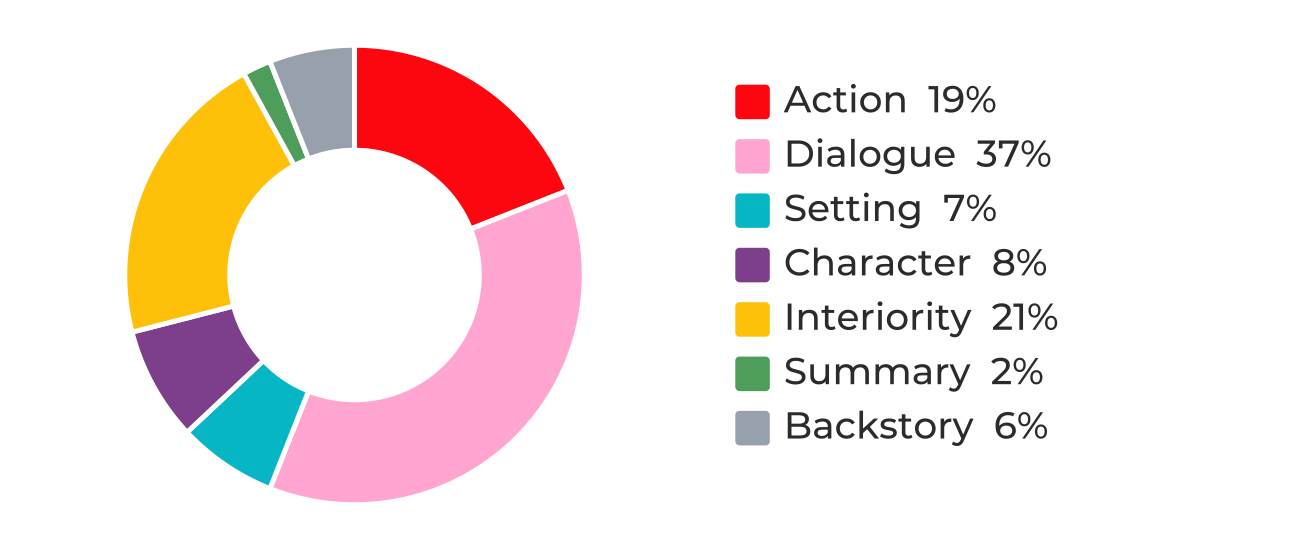
Figure 6: Scene components in King of Ashes, chapter six
Caption: Dialogue and action give the scene motion and stakes, while interiority heightens the impact.
Alt text: A donut chart of scene components in chapter six of King of Ashes, with a legend giving the share of each component. Dialogue is the largest slice at 37 percent, followed by interiority at 21 percent, action at 19 percent, character description at 8 percent, setting at 7 percent, backstory at 6 percent, and summary at 2 percent. Dialogue and action together make up more than half the chapter, with interiority the next largest component.
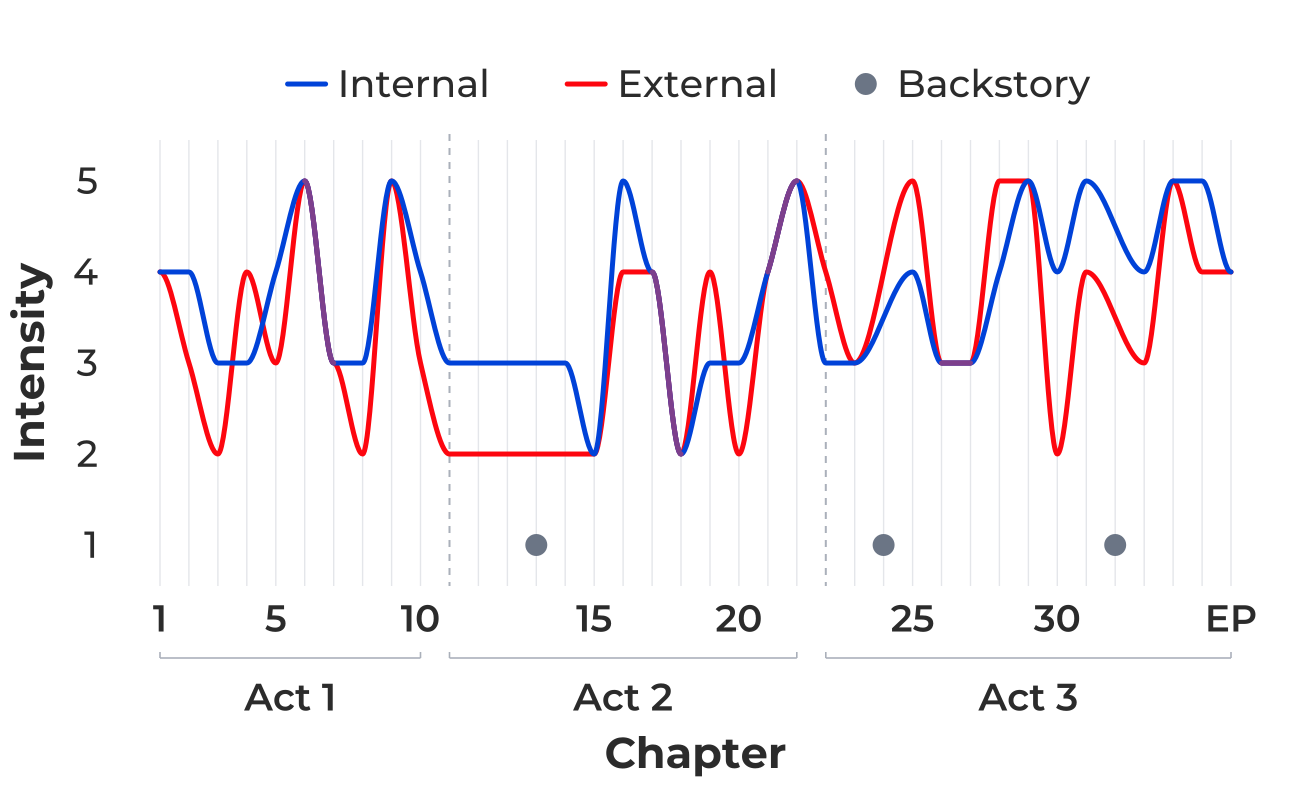
Figure 7: Internal and external intensity across King of Ashes
Caption: The flashback chapters are low intensity because the events are already deeply familiar to the POV character.
Alt text: A line graph of internal and external intensity across King of Ashes, scored from 1 to 5 by chapter from chapter 1 through the epilogue and divided into three acts: act one is chapters 1 through 10, act two chapters 11 through 22, and act three chapter 23 through the epilogue. A blue line tracks internal intensity and a red line external intensity, and three gray dots at the bottom mark the flashback chapters, one in act two and two in act three. The two lines move roughly together in act one, spiking to 5 at chapters 6 and 9; they separate in act two, where external intensity sits at 2 for several chapters while internal intensity holds at 3; and in act three both run at or near 5 before stepping down to 4 at the end. The flashback chapters sit at the lowest level because their events are already familiar to the point-of-view character.
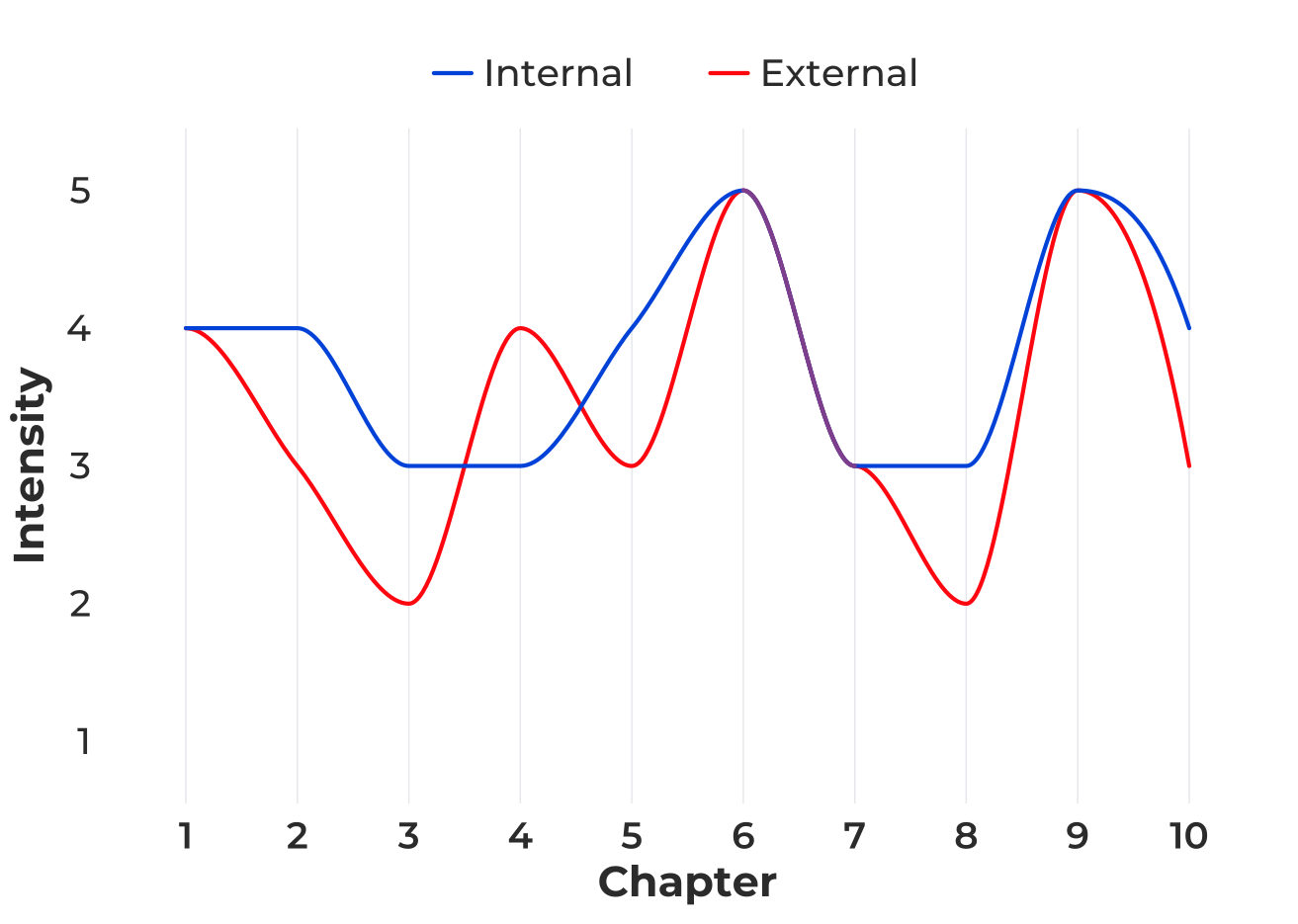
Figure 8: Internal and external intensity in act one of King of Ashes
Caption: Internal and external intensity rise and fall almost in step here; the gap opens up in act two.
Alt text: A line graph of internal and external intensity in act one of King of Ashes, chapters 1 through 10, scored from 1 to 5, with a blue line for internal intensity and a red line for external intensity. Both lines start at 4, dip in chapter 3, and then rise together to peaks of 5 in chapters 6 and 9, with external intensity falling further after each spike, to 2 in chapters 3 and 8, while internal intensity settles at 3. The two lines rise and fall almost in step throughout the act.
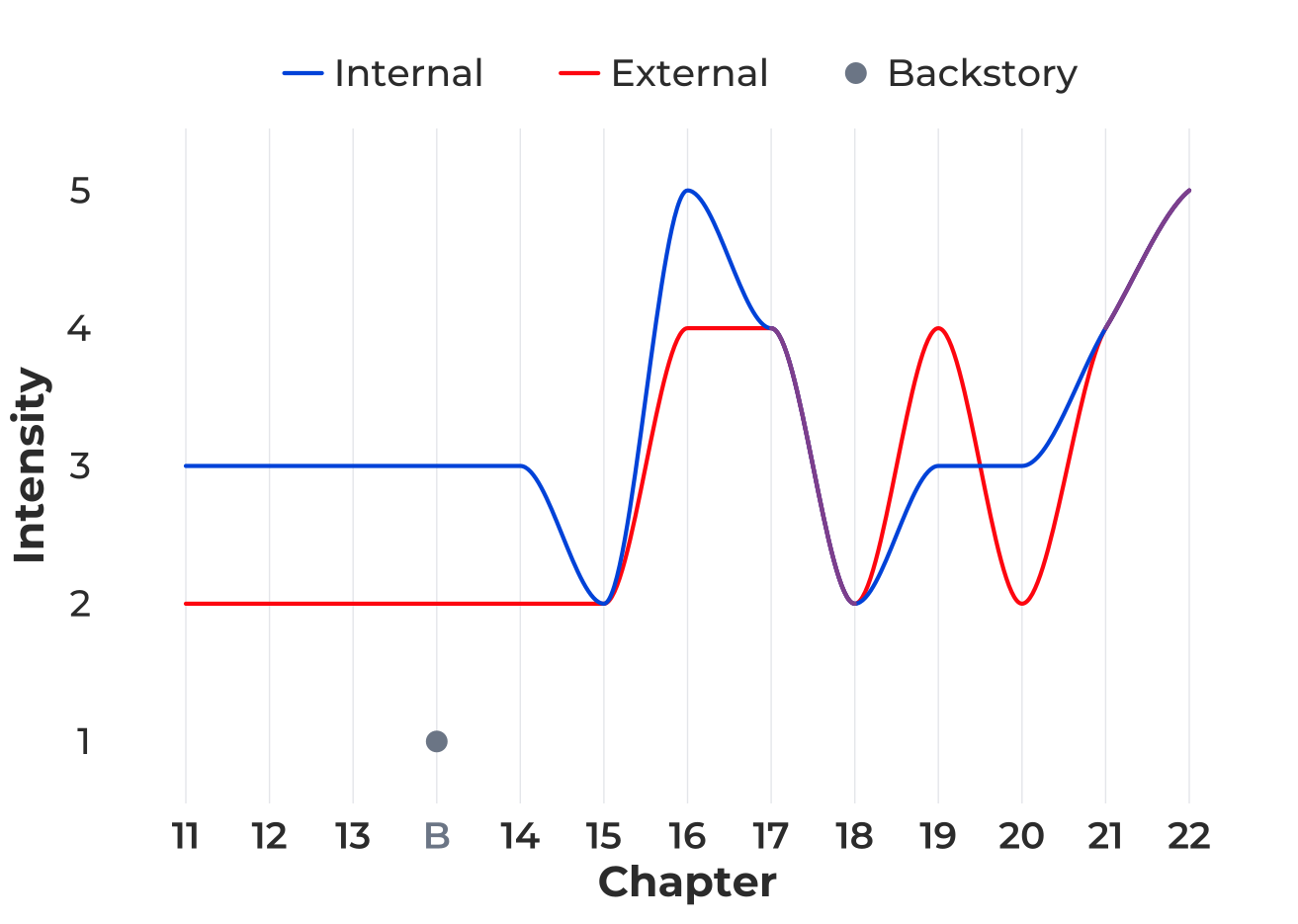
Figure 9: Internal and external intensity in act two of King of Ashes
Caption: External intensity drops while internal intensity stays high.
Alt text: A line graph of internal and external intensity in act two of King of Ashes, chapters 11 through 22, scored from 1 to 5, with a blue line for internal intensity, a red line for external intensity, and a gray dot marking a flashback chapter, labeled B, between chapters 13 and 14. From chapter 11 through 15 external intensity stays flat at 2 while internal intensity holds at 3; in chapter 16 internal intensity spikes to 5 as external intensity rises only to 4, and the two lines then dip and rise together, meeting at 2 in chapter 18 and climbing to 5 in chapter 22. Across the act, external intensity drops while internal intensity stays higher.
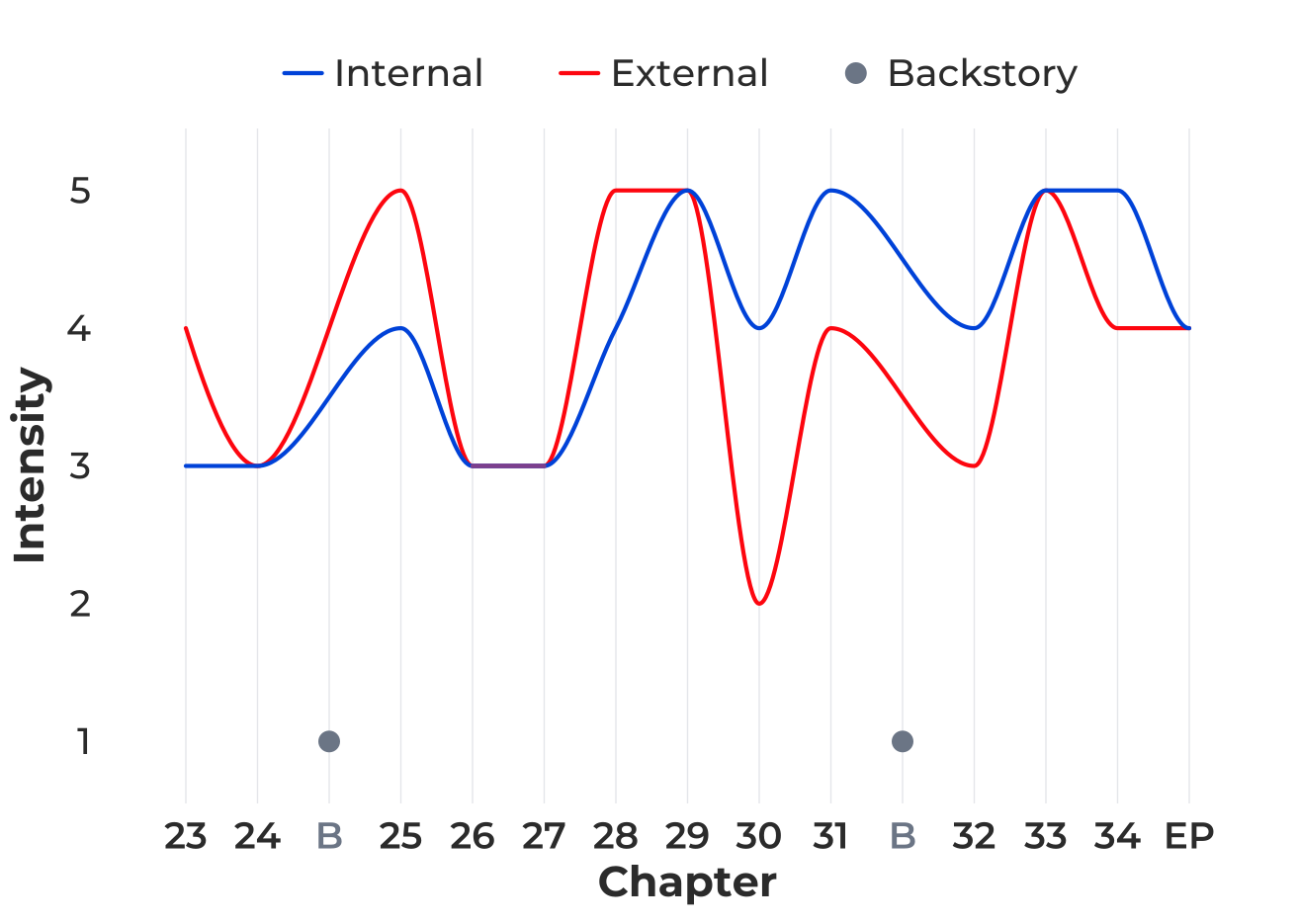
Figure 10: Internal and external intensity in act three of King of Ashes
Caption: Notice the shape of the final chapters, the falling action: external intensity steps down first, followed by internal intensity.
Alt text: A line graph of internal and external intensity in act three of King of Ashes, chapter 23 through the epilogue, scored from 1 to 5, with a blue line for internal intensity, a red line for external intensity, and two gray dots marking flashback chapters, labeled B, one after chapter 24 and one after chapter 31. External intensity spikes to 5 in chapter 25 and again from chapter 28 through 29, then plunges to 2 in chapter 30, while internal intensity peaks at 5 in chapters 29 and 31; both lines meet at 5 in chapter 33. In the falling action, external intensity steps down to 4 first, in chapter 34, and internal intensity follows, dropping to 4 in the epilogue.
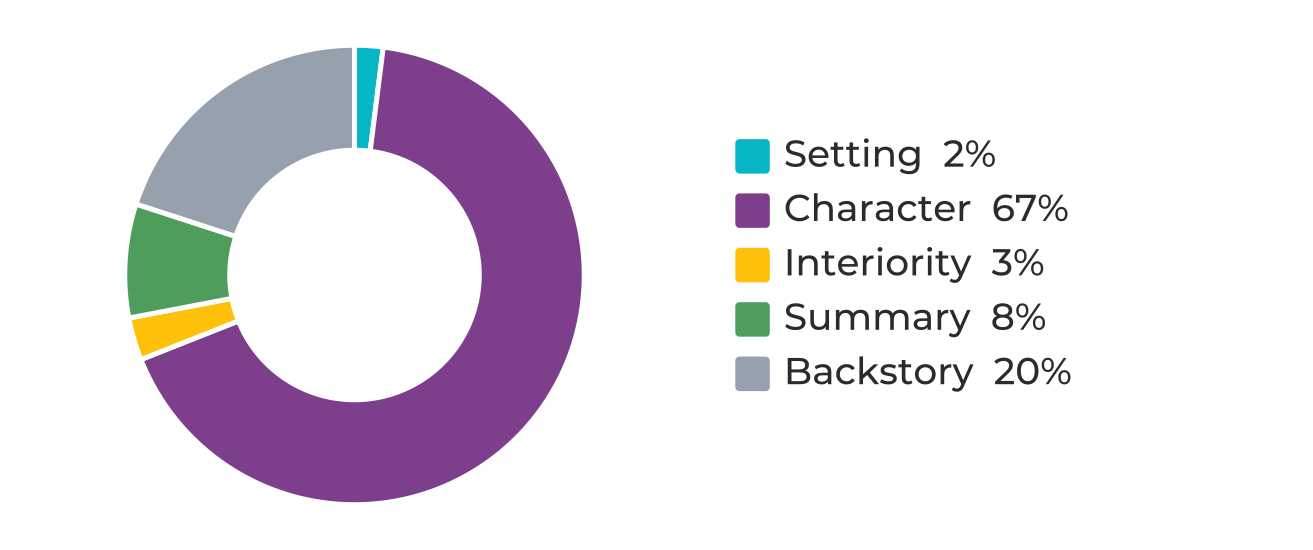
Figure 11: Scene components in Death of the Author, chapter three
Caption: Character description dominates the scene, and there is no live action at all.
Alt text: A donut chart showing the scene components of chapter three of Death of the Author by percentage of the chapter. Character description takes up 67 percent of the ring, backstory 20 percent, summary 8 percent, interiority 3 percent, and setting 2 percent. There are no slices for action or dialogue, so the chapter is built entirely from telling components, with character description far outweighing everything else.
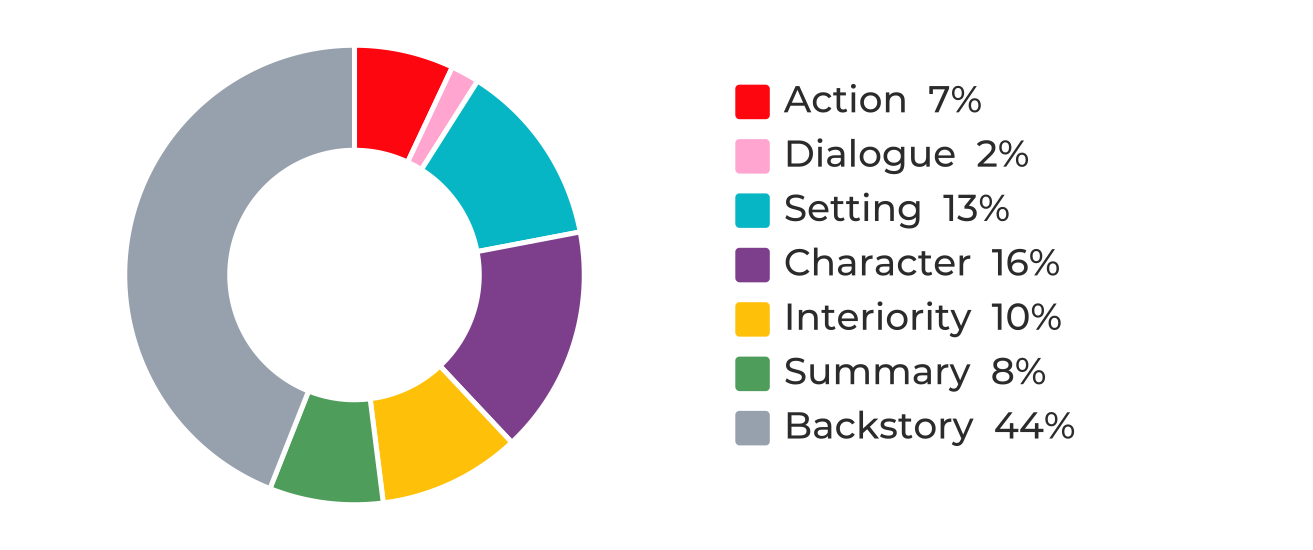
Figure 12: Scene components in Death of the Author, chapter six
Caption: Backstory still dominates, but anchored to a live scene.
Alt text: A donut chart showing the scene components of chapter six of Death of the Author by percentage of the chapter. Backstory is the largest slice at 44 percent, followed by character description at 16 percent, setting at 13 percent, interiority at 10 percent, summary at 8 percent, action at 7 percent, and dialogue at 2 percent. Compared with chapter three, backstory still dominates, but action, dialogue, and a much larger share of setting now surround it, tying the exposition to a live scene.
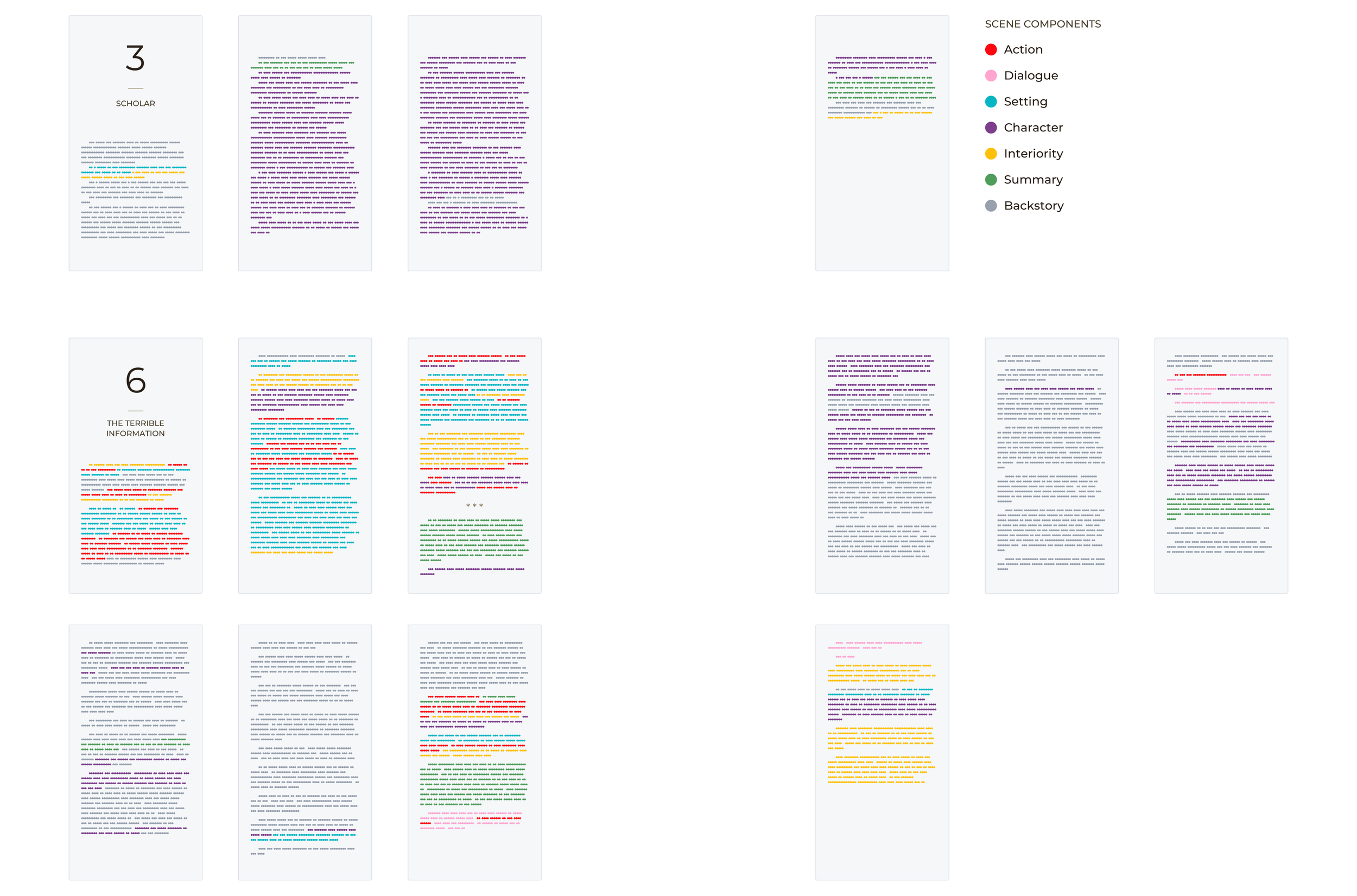
Figure 13: Scene texture of Death of the Author, chapters three and six
Caption: Chapter three is top-down, expository telling, while chapter six is bottom-up, scenic worldbuilding, with the telling elements embedded within the showing elements of a live scene.
Alt text: A two-page spread of color-coded page renderings of chapters three and six of Death of the Author, each word shown as a dot colored by scene component: red for action, pink for dialogue, blue for setting, purple for character, yellow for interiority, green for summary, and gray for backstory. The top row shows the four pages of chapter three: the opening page is almost solid gray backstory with a single flicker of blue and yellow, the middle pages are dense purple character description mixed with gray, and the short final page ends in a block of green summary and a few lines of yellow. The two lower rows show the ten pages of chapter six: the opening pages are streaked with red action and long runs of blue setting broken by yellow interiority, the middle pages settle into large blocks of purple and gray, and the final pages return to red, blue, and green with a closing stretch of yellow and pink. Chapter three reads as an unbroken field of telling, while chapter six embeds its telling inside a scene in progress.
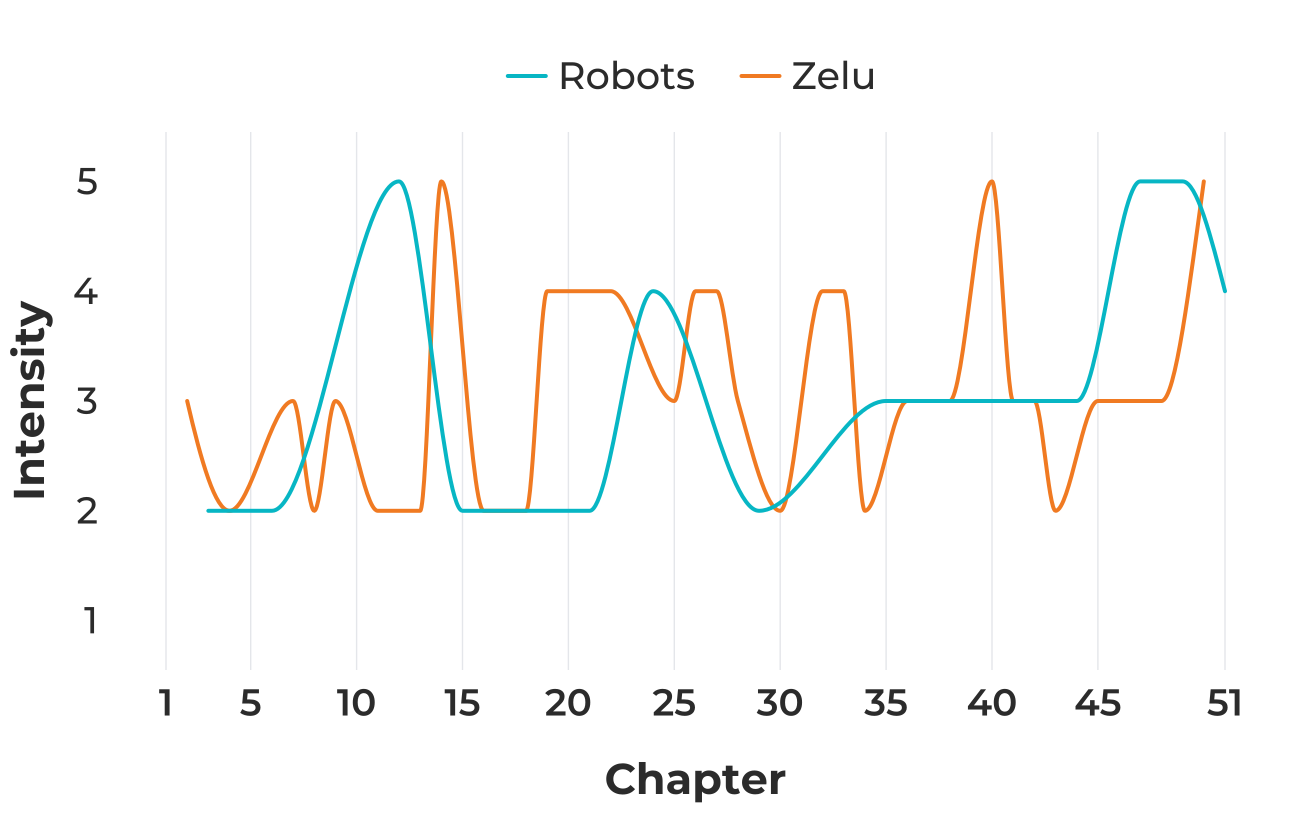
Figure 14: External intensity of the Robots and Zelu strands of Death of the Author
Caption: Even where the Robots strand spikes, its peaks stay below Zelu’s—one reason her strand reads as the primary one.
Alt text: A line graph comparing the external intensity of the Robots strand and the Zelu strand of Death of the Author across 51 chapters, on a scale of 1 to 5. The Robots line climbs to a single early peak of 5 around chapter 12, then falls back to 2, rises to 4 near chapter 24, plateaus at 3 through the middle chapters, and reaches 5 again only in the final chapters around 47 and 48. The Zelu line spikes to 5 around chapters 14 and 40 and again at the very end, holds at 4 for a long stretch around chapters 19 to 22, and repeatedly returns to 4 between 26 and 33. Wherever the two lines are compared, the Zelu strand reaches or exceeds the Robots strand’s highs, which is part of why her strand reads as the primary one.
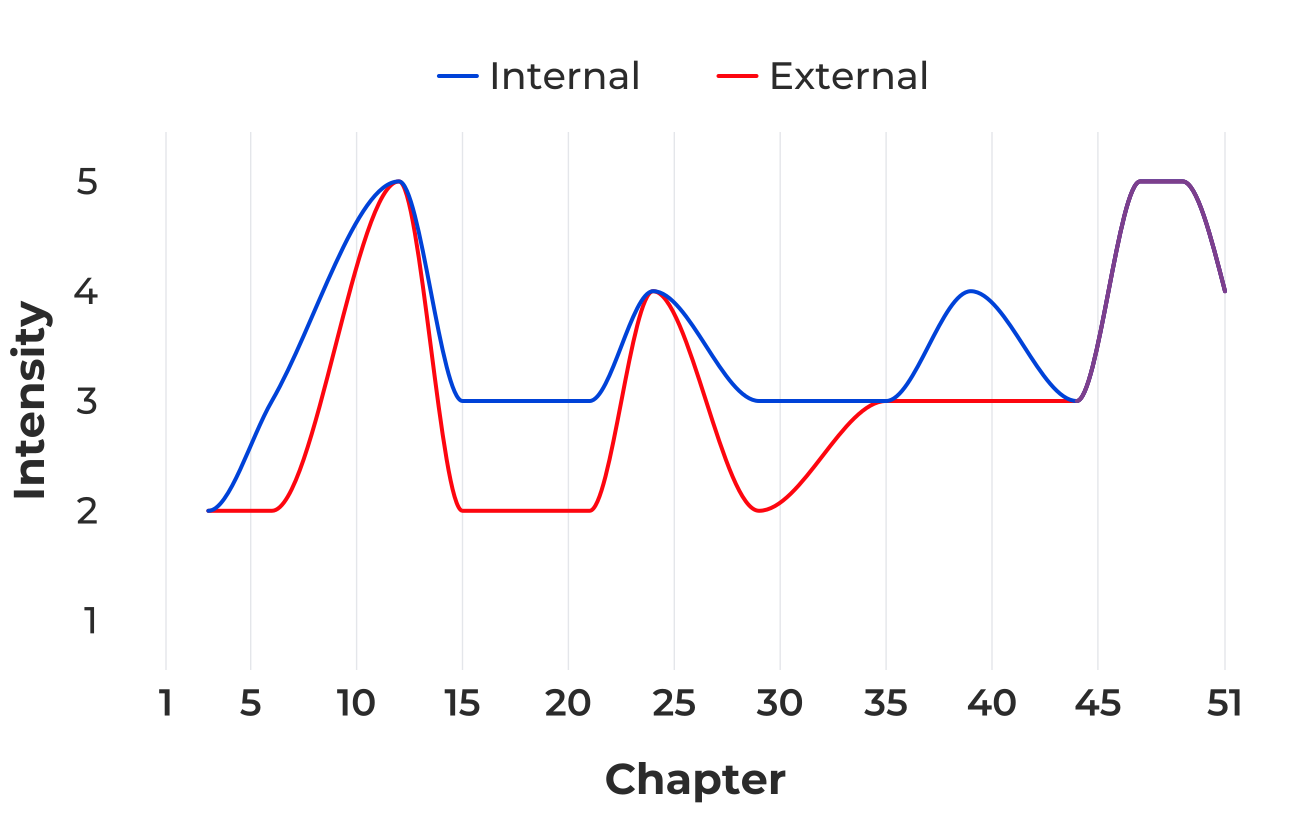
Figure 15: Internal and external intensity of the Robots strand—the arc
Caption: The early spike is the Purge, the inciting incident, followed by the wave-like arc toward the climax.
Alt text: A line graph showing the internal and external intensity of the Robots strand of Death of the Author across 51 chapters, on a scale of 1 to 5, with internal in blue and external in red. Both lines start at 2, climb together to a shared peak of 5 around chapter 12, and then drop, the external line falling all the way back to 2 while the internal line settles at 3. They meet again at 4 around chapter 24, the internal line rises alone to 4 near chapter 39, and both converge to 3 and then climb together to a plateau of 5 around chapters 47 to 48 before easing to 4 at the end. The early spike is the Purge, the inciting incident, and the shape that follows is a wave-like arc of rising action toward the climax and falling action after it.
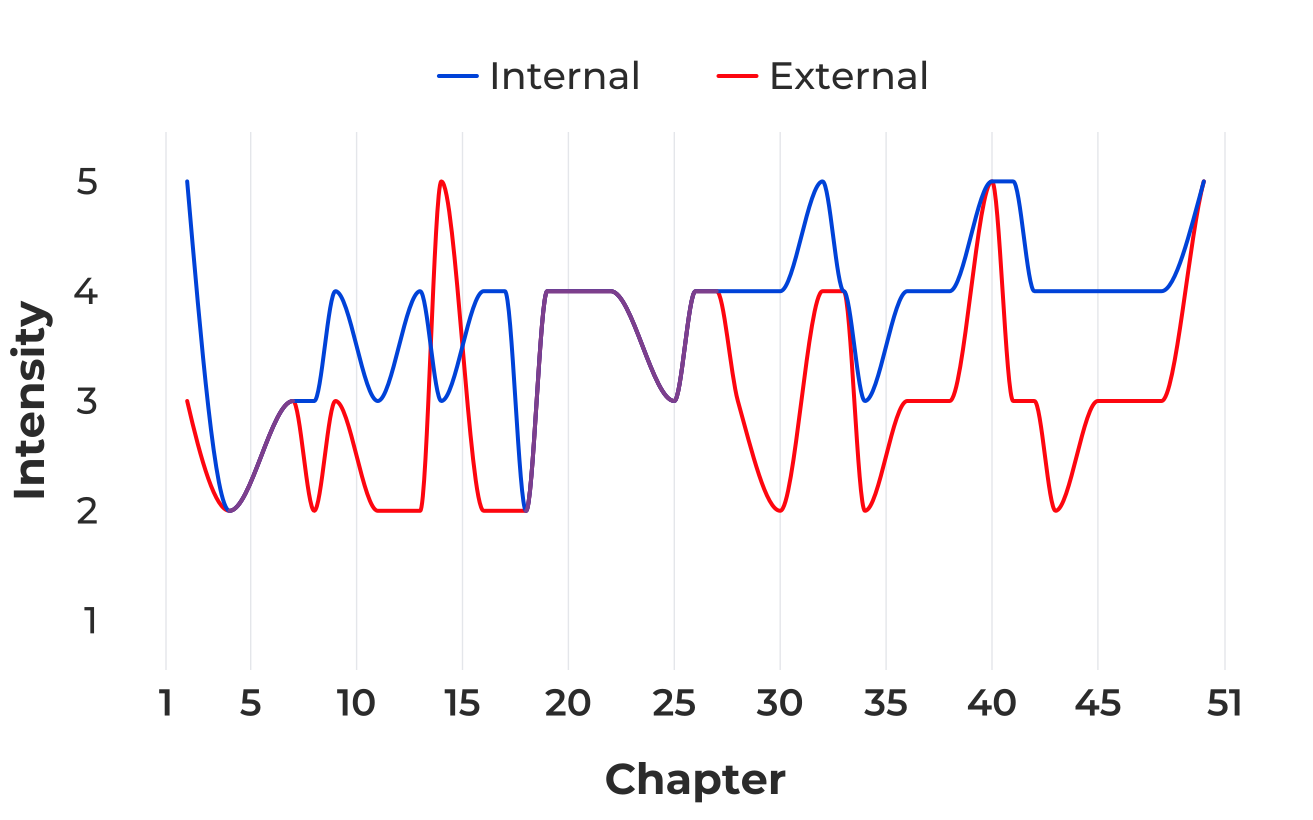
Figure 16: Internal and external intensity of the Zelu strand—the spiral
Caption: Zelu’s internal intensity almost never dips, even when the external plot has lower intensity.
Alt text: A line graph showing the internal and external intensity of the Zelu strand of Death of the Author across 51 chapters, on a scale of 1 to 5, with internal in blue and external in red. The blue internal line opens at 5, dips to 2 by chapter 4, and then stays between 3 and 5 for the rest of the novel, plateauing at 4 through the middle chapters and touching 5 around chapters 32, 40, and the finale. The red external line is far more jagged, repeatedly falling to 2 around chapters 8, 11, 16, 30, 34, and 43 between spikes to 5 at chapters 14 and 40. The gap between the two lines shows how Zelu’s internal intensity almost never dips, even when the external plot has lower intensity.
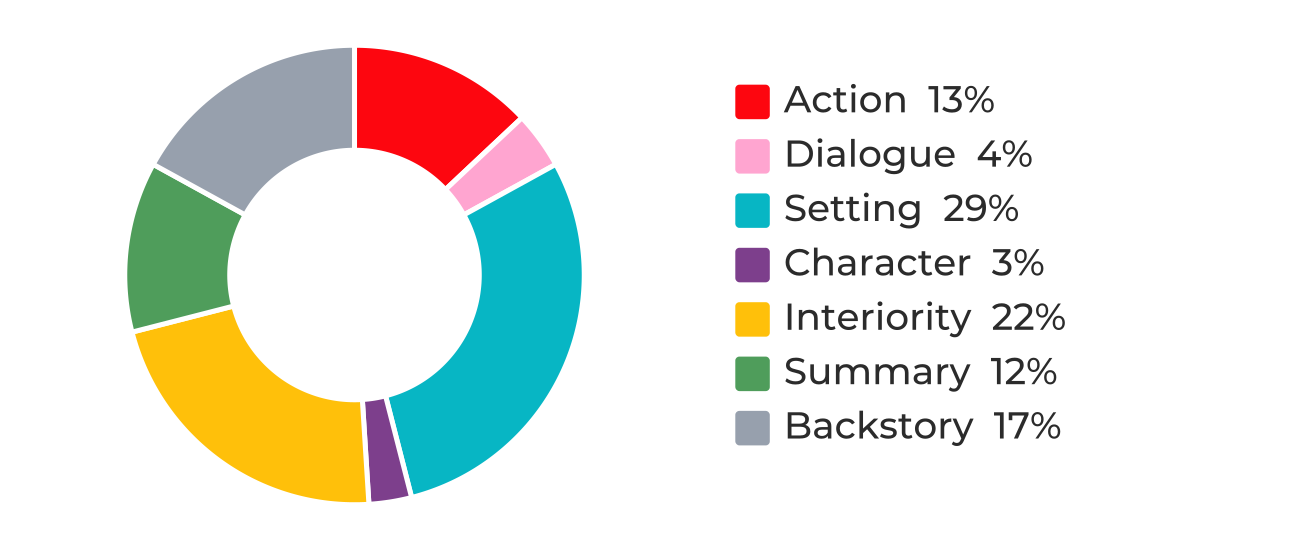
Figure 17: Scene components in Wild Dark Shore, chapter four
Caption: Setting is the single largest component, fitting for a chapter in which the island itself starts to feel like a character.
Alt text: A donut chart showing the scene components of chapter four of Wild Dark Shore by percentage of the chapter. Setting is the largest slice at 29 percent, followed by interiority at 22 percent, backstory at 17 percent, action at 13 percent, summary at 12 percent, dialogue at 4 percent, and character description at 3 percent. Setting outweighs every other component, fitting for a chapter in which the island itself starts to feel like a character.
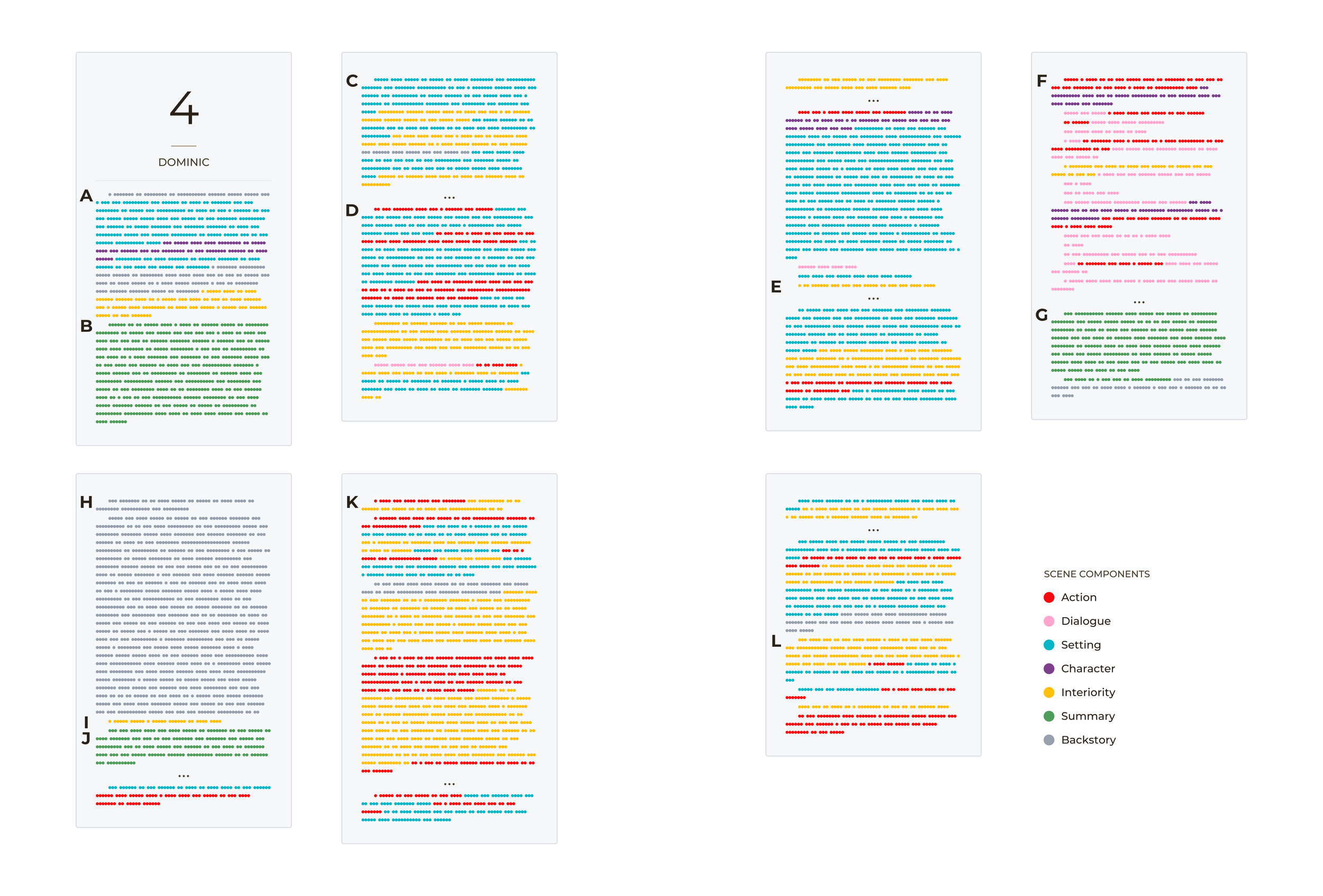
Figure 18: Scene texture of Wild Dark Shore, chapter four
Caption: Telling and showing arrive in blocks—long stretches of backstory and summary bracketed by the short bursts of action that open the second scene and end the chapter.
Alt text: A two-page spread of color-coded page renderings of chapter four of Wild Dark Shore, titled Dominic, each word shown as a dot colored by scene component: red for action, pink for dialogue, blue for setting, purple for character, yellow for interiority, green for summary, and gray for backstory. Seven pages are laid out in two rows, with passages labeled A through L. The chapter opens with a block of gray backstory and yellow interiority at A, then a solid block of green summary at B; the next pages are mostly blue setting with a burst of red action at D, then pink dialogue mixed with red and a closing block of green at E through G. The second row begins with an almost entirely gray page of backstory at H, ending in slivers of yellow and green at I and J, then a page at K that alternates blue, yellow, and red, before the final page ends the chapter in short red lines of action at L. Telling and showing arrive in blocks—long stretches of gray and green bracketed by the red flares that open the second scene and end the chapter.
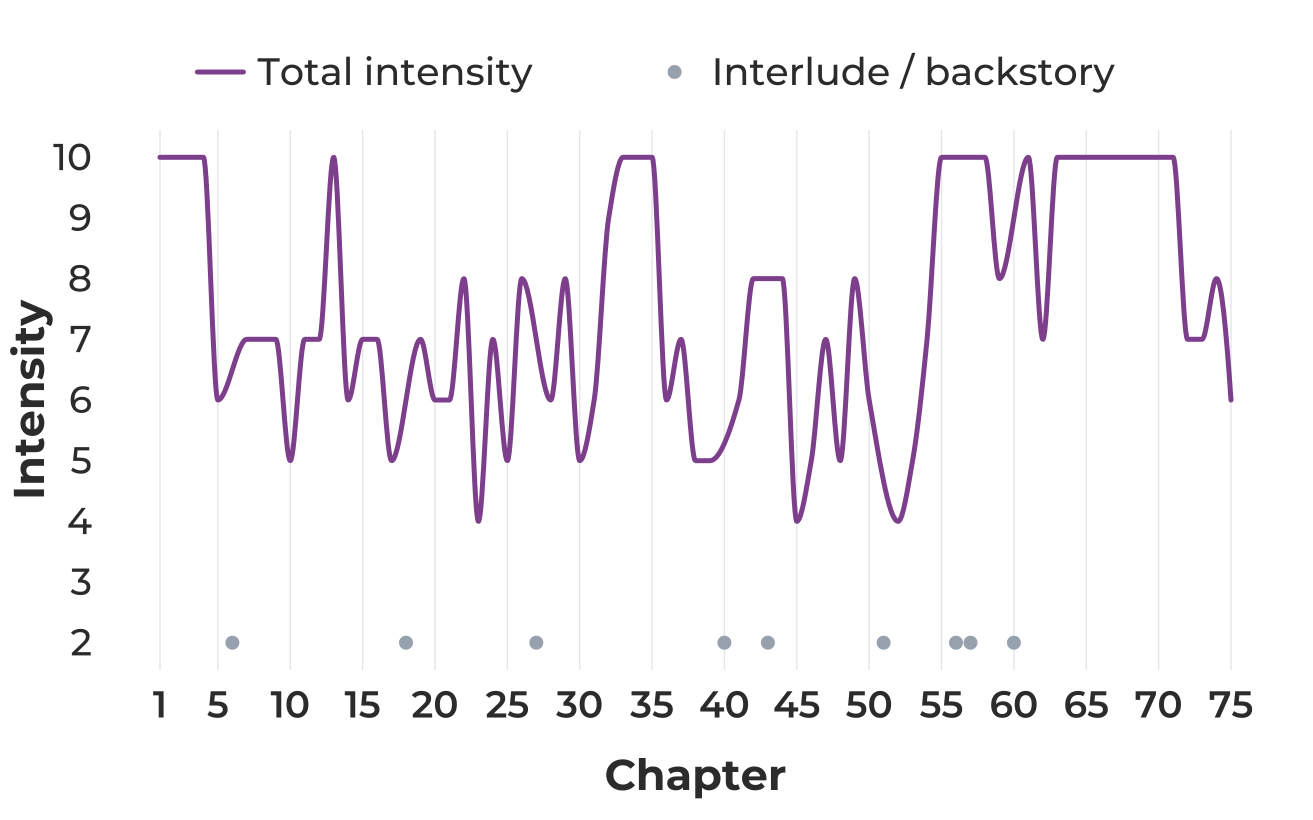
Figure 19: Overall intensity across Wild Dark Shore
Caption: McConaghy opens with a high-intensity scene and provides periodic spikes of intensity before the sustained life-or-death stakes of the final chapters.
Alt text: A line graph showing the total intensity of Wild Dark Shore across 75 chapters on a scale of 1 to 10, with gray dots below the line marking the interlude chapters. The line opens at 10 for the first four chapters, drops to between 5 and 7, and then throws up periodic spikes—to 10 around chapters 13 and 33 to 35, and to 8 around chapters 22, 27, 30, 42, and 49—with troughs as low as 4 around chapters 23, 45, and 52. From chapter 55 onward the line sits at or near 10 almost continuously through chapter 71 before easing to 7 and then 6 at the very end. McConaghy opens at full intensity, delivers regular jolts through the middle, and sustains life-or-death stakes across the final twenty chapters.
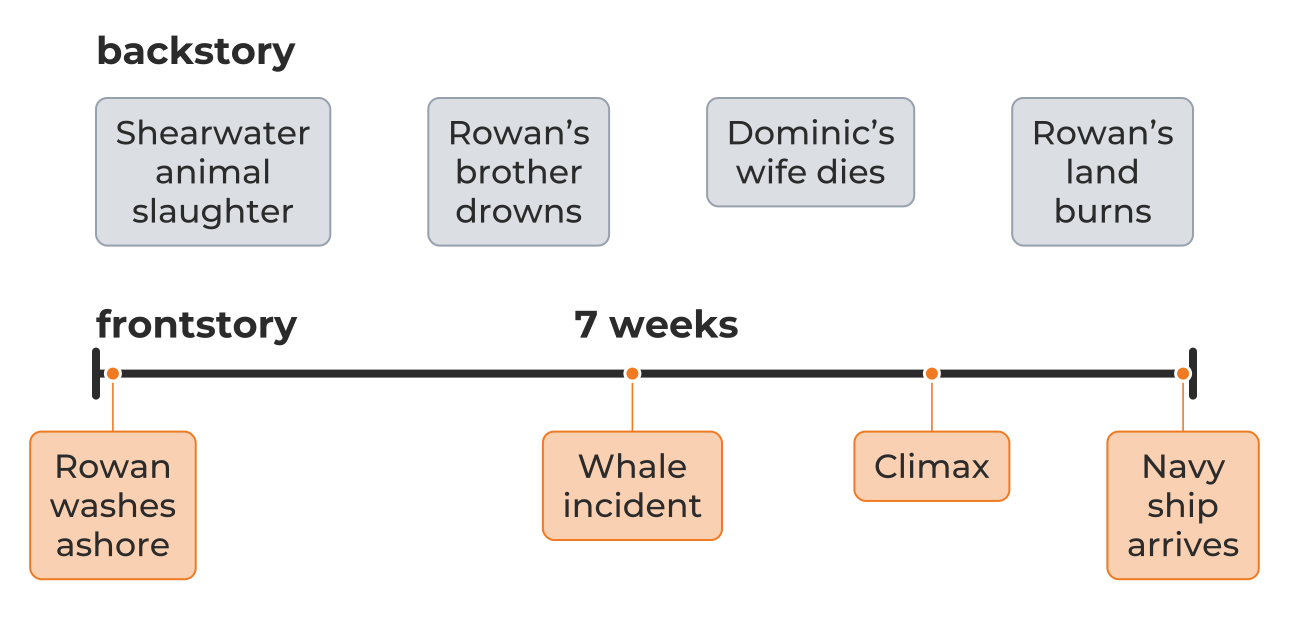
Figure 20: Wild Dark Shore’s frontstory and backstory
Caption: The backstory ghosts are discussed and remembered by characters but never dramatized on the page.
Alt text: A timeline diagram of Wild Dark Shore’s frontstory and backstory. A horizontal line labeled frontstory and spanning 7 weeks carries four orange markers: Rowan washes ashore at the left end, the whale incident near the middle, the climax about three-quarters of the way along, and the Navy ship arrives at the right end. Above the line, four gray boxes labeled backstory float free of the timeline: the Shearwater animal slaughter, Rowan’s brother drowns, Dominic’s wife dies, and Rowan’s land burns. The backstory ghosts sit apart from the frontstory line because they are discussed and remembered by characters but never dramatized on the page.
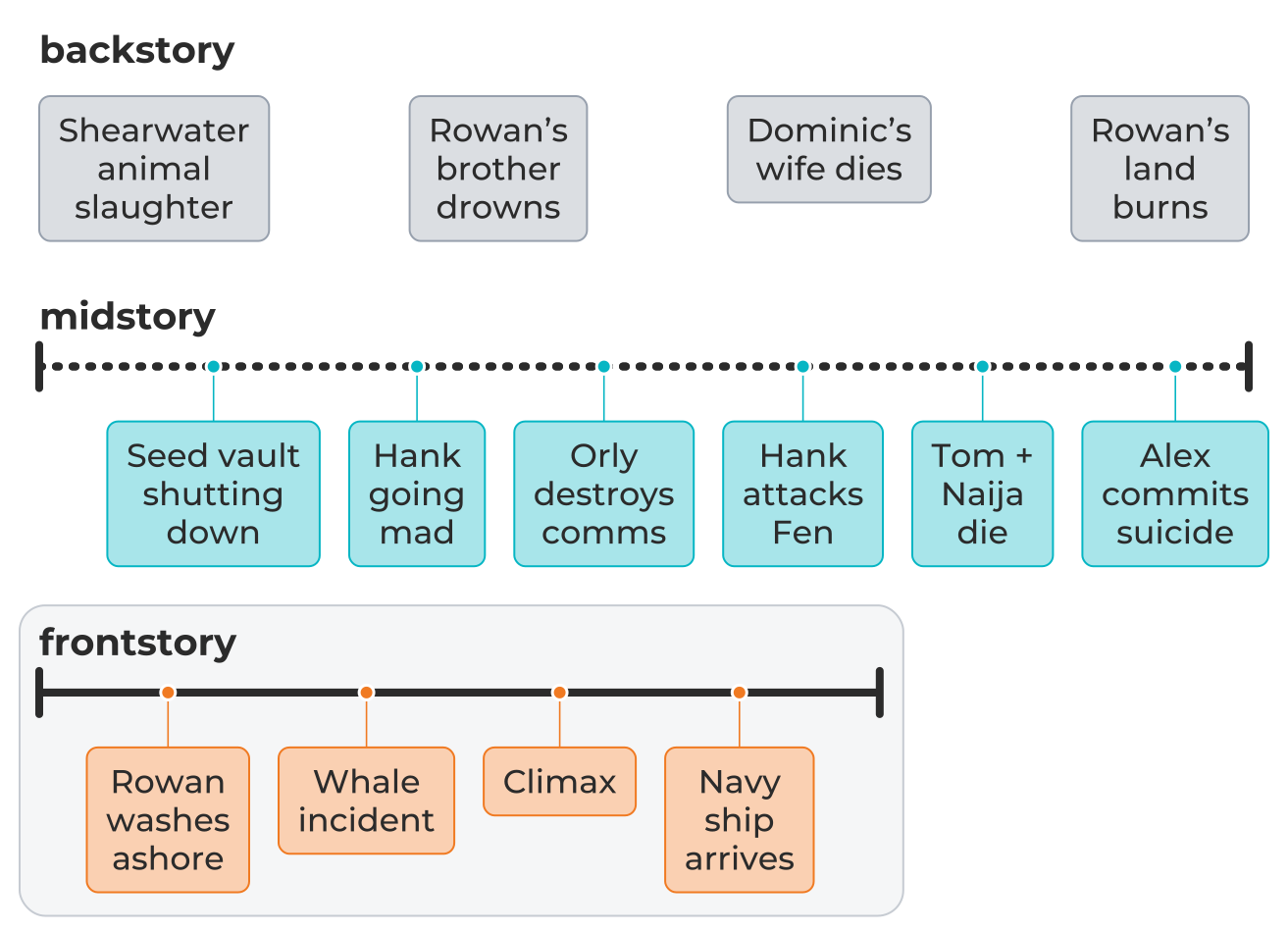
Figure 21: Wild Dark Shore’s midstory
Caption: A series of dramatic events occur in the three months before the frontstory begins.
Alt text: A three-tier timeline of Wild Dark Shore showing backstory, midstory, and frontstory as separate rows. Four backstory events sit in gray boxes across the top: the Shearwater animal slaughter, Rowan’s brother drowning, Dominic’s wife dying, and Rowan’s land burning. The midstory row is a long dotted line with six events—the seed vault shutting down, Hank going mad, Orly destroying the comms, Hank attacking Fen, Tom and Naija dying, and Alex’s suicide. Below it, a much shorter frontstory line holds four events: Rowan washing ashore, the whale incident, the climax, and the navy ship’s arrival. The row of dramatic midstory events is far longer and denser than the frontstory that follows it.
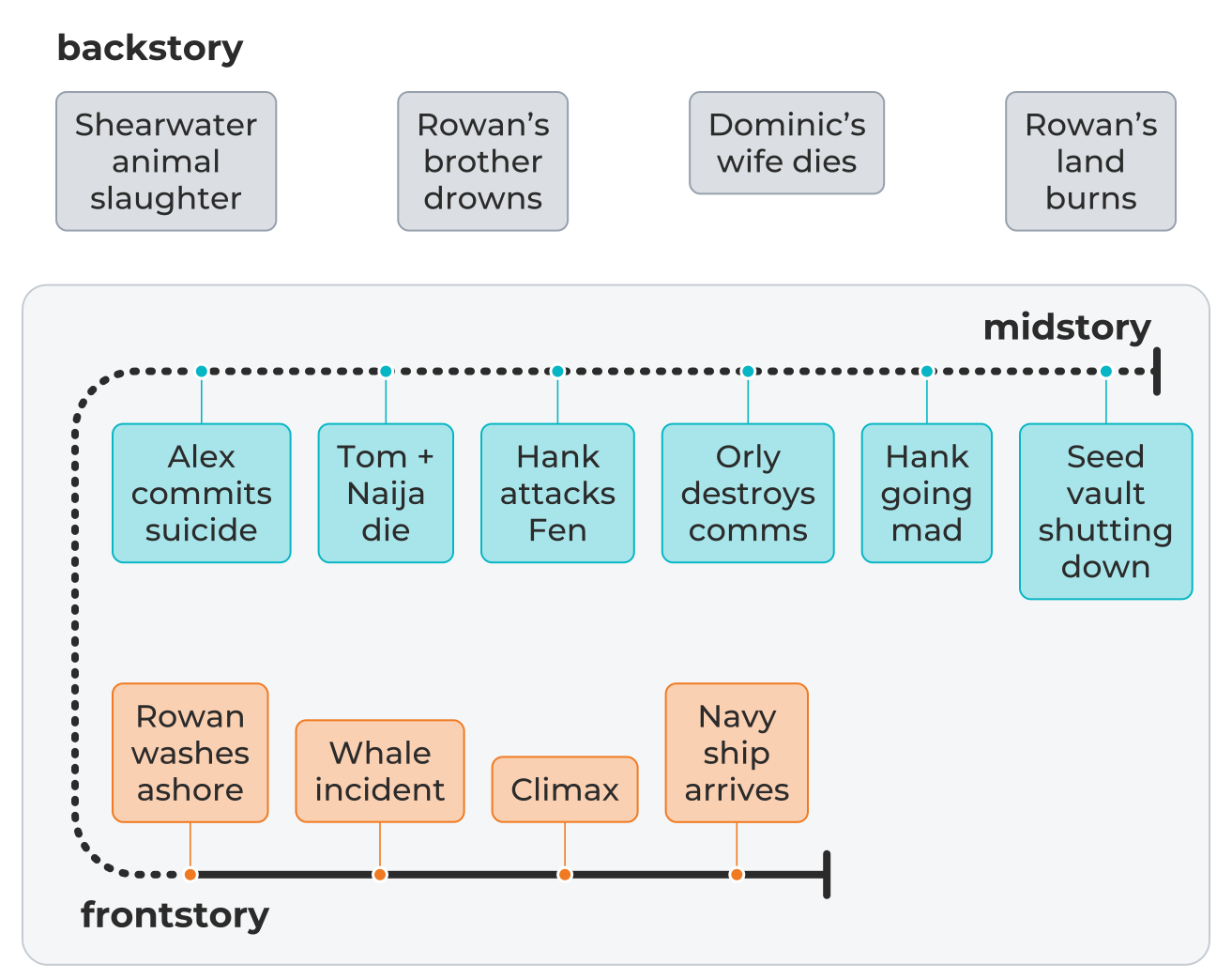
Figure 22: Timeline compression in Wild Dark Shore
Caption: Folded in half into the novel’s “black box,” the fresh midstory ghosts are trapped inside with the frontstory.
Alt text: A diagram of timeline compression in Wild Dark Shore. The four gray backstory events remain in a row across the top, but the midstory and frontstory have been folded into a single rounded box: the dotted midstory line now runs right to left along the top of the box, curves down the left edge, and continues as the solid frontstory line along the bottom, so that the six midstory events (Alex’s suicide, Tom and Naija dying, Hank attacking Fen, Orly destroying the comms, Hank going mad, the seed vault shutting down) sit directly above the four frontstory events. The fold traps the recent midstory events inside the same container as the frontstory while the older backstory stays outside it.
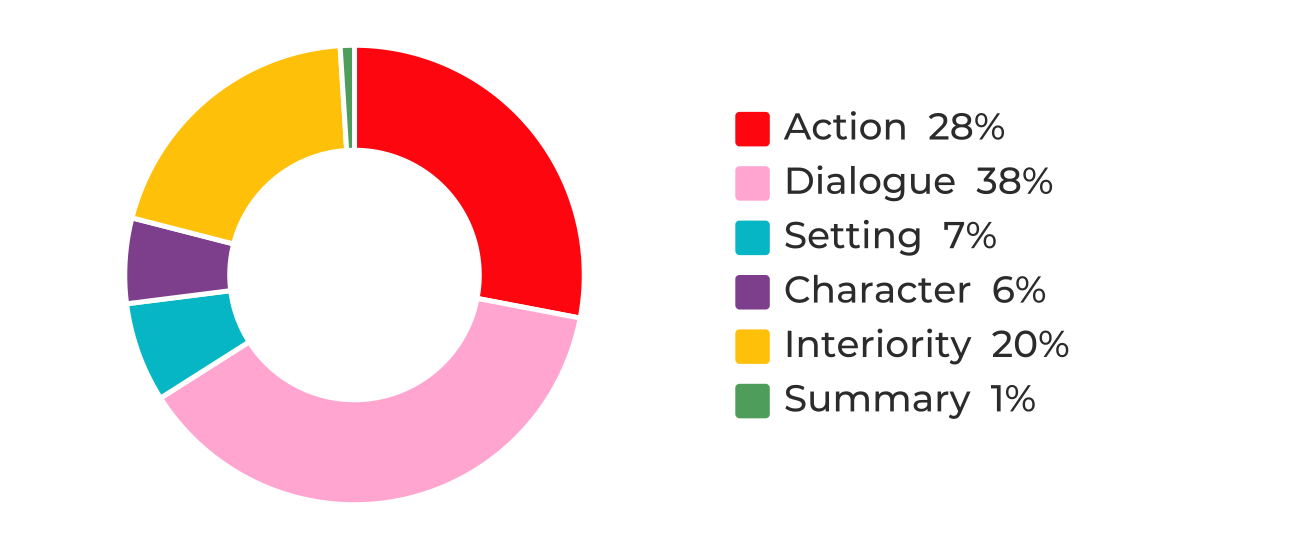
Caption: Dialogue leads, but action provides movement while interiority delivers emotions and motivations.
Figure 23: Scene components in Great Big Beautiful Life, chapter four
Alt text: A donut chart of scene components in chapter four of Great Big Beautiful Life. Dialogue is the largest slice at 38 percent, followed by action at 28 percent and interiority at 20 percent; setting is 7 percent, character 6 percent, and summary 1 percent. Dialogue leads, with action and interiority together making up nearly half of the chapter.
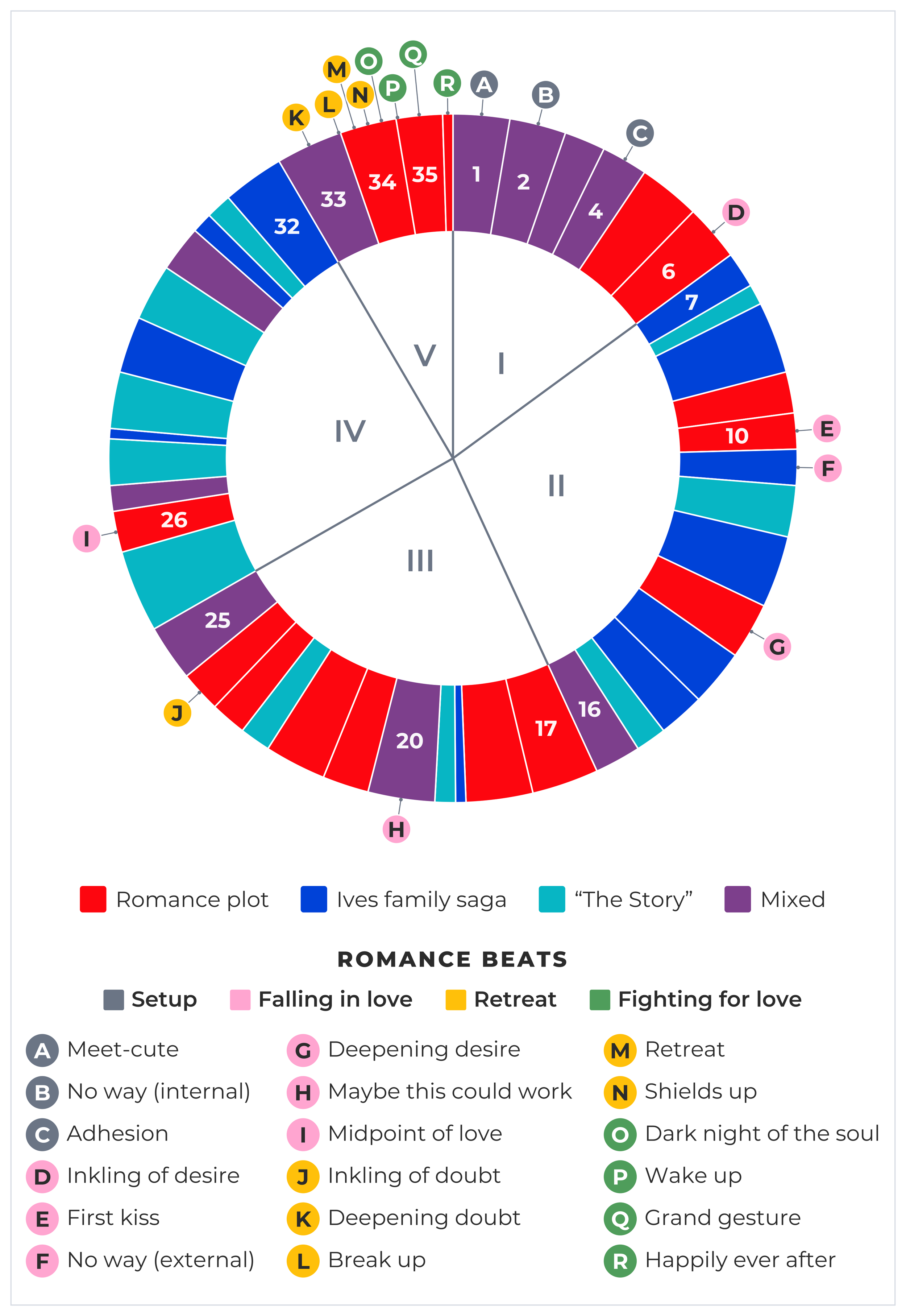
Figure 24: Romance A-plot versus family saga B-plot in Great Big Beautiful Life
Caption: The saga’s dominance squeezes the closing romance beats into the novel’s final chapters. Wedge width shows each chapter’s page count; the roman numerals mark my five sections, not divisions in the novel.
Alt text: A radial chart of Great Big Beautiful Life in which each chapter is a wedge around a ring, wedge width proportional to page count, running clockwise from chapter 1 at the top; gray spokes divide the ring into five sections numbered I through V. Wedges are colored red for the romance plot, blue for the Ives family saga, turquoise for the standalone “The Story” chapters, and purple for mixed chapters. Blue and turquoise dominate the right and left sides of the ring, with red concentrated around chapters 17 to 26 at the bottom left and in the final chapters 34 and 35. Lettered markers A through R around the outside place the eighteen beats of Gwen Hayes’s Romancing the Beat: A through C cluster at chapters 1 to 4, D through I are spread across chapters 6 to 26, J sits at about chapter 25, and K through R—nearly the entire retreat and fighting-for-love sequence—are bunched together at the top of the ring in chapters 33 to 35. The crowding of the last eight beats into three chapters shows how the saga squeezes the closing romance beats.
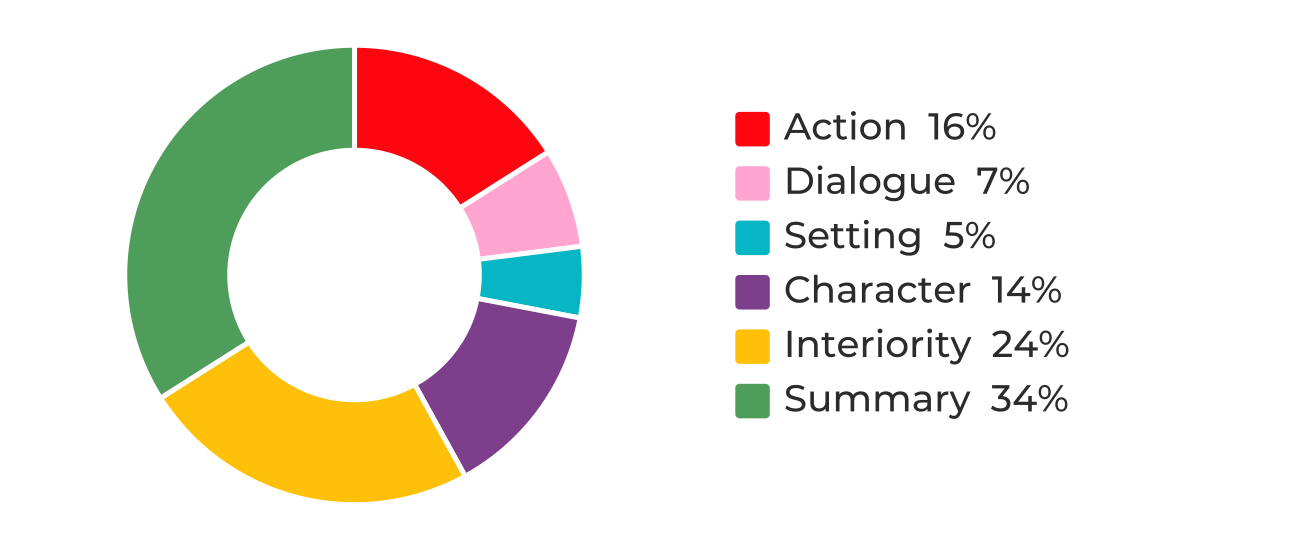
Figure 25: Scene components in Bury Our Bones in the Midnight Soil, Sabine’s chapter four
Caption: Telling elements make up 68 percent of the scene, which ends with a theme-focused action sequence.
Alt text: A donut chart of scene components in Sabine’s chapter four of Bury Our Bones in the Midnight Soil. Summary is the largest slice at 34 percent, followed by interiority at 24 percent, action at 16 percent, character at 14 percent, dialogue at 7 percent, and setting at 5 percent. Summary, interiority, and character—the telling components—together make up more than two-thirds of the scene.

Figure 26: Scene texture of Bury Our Bones in the Midnight Soil, Sabine’s chapter four
Caption: Summary blocks skip forward in time efficiently using chronological references.
Alt text: A full-page color-coded rendering of Sabine’s chapter four of Bury Our Bones in the Midnight Soil, each word shown as a dot colored by scene component: red for action, pink for dialogue, turquoise for setting, purple for character, gold for interiority, and green for summary. The first page opens with gold interiority and then runs through long green summary blocks, each introduced by a legible time phrase—“That first month,” “Now and then,” “as summer nears,” “Every night,” “And every night,” “The seasons change.” The second page shifts to purple, gold, and turquoise, with “their first year passes in a blur” and “she will always remember this” introducing a stretch of setting and red action, and the final third of a page is almost entirely red action broken by short pink dialogue. The chapter compresses long stretches of time through summary before landing on a single live action sequence.
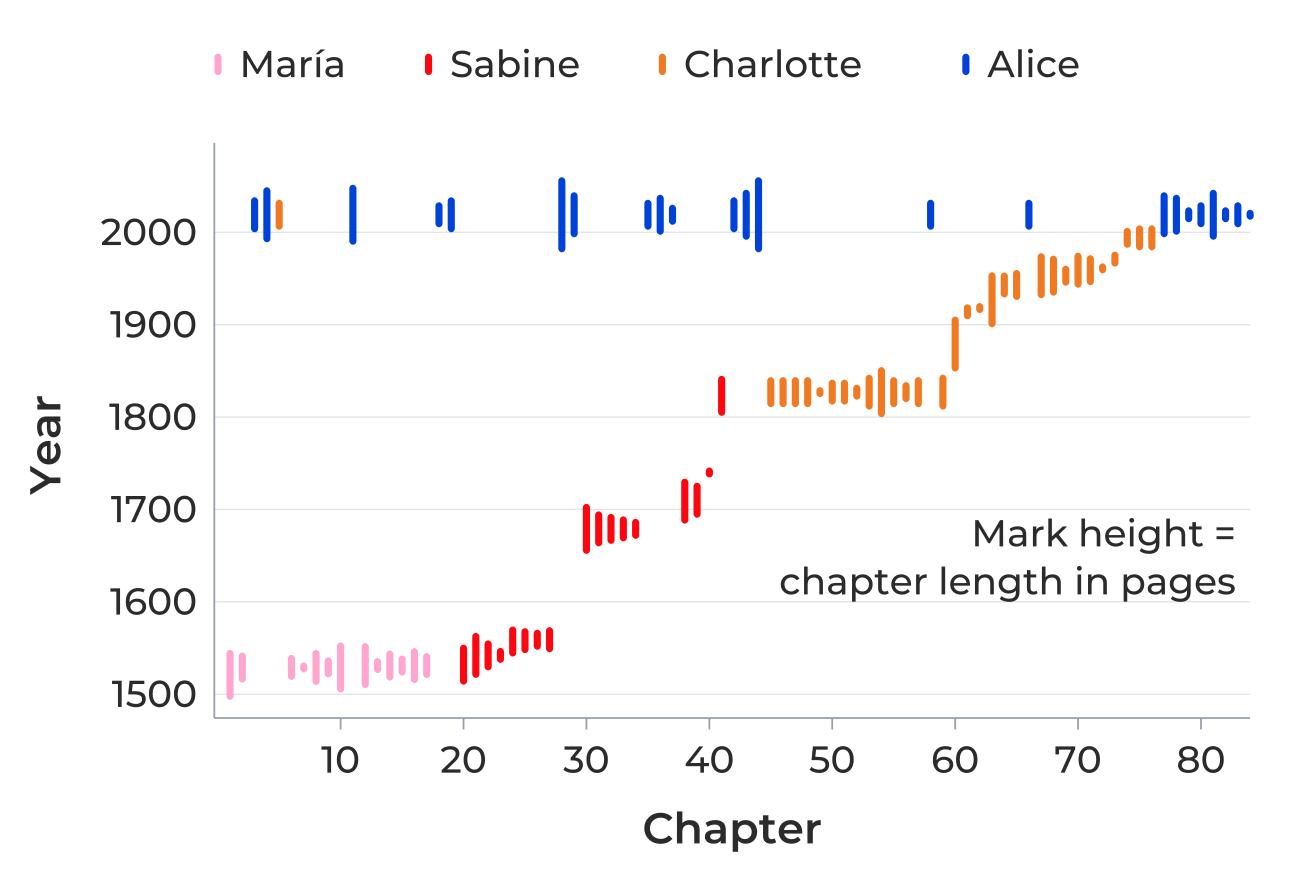
Figure 27: Chronology of Bury Our Bones in the Midnight Soil
Caption: The narrators fan out across five centuries but converge on a single point in 2019—the tip of the wedge—where their timelines finally meet.
Alt text: A chronology chart of Bury Our Bones in the Midnight Soil with chapter number, 1 to about 84, on the horizontal axis and year, 1500 to 2000 and beyond, on the vertical axis. Each chapter is a vertical tick placed at its year, with tick height showing page count, and colored by narrator: pink for María, red for Sabine, orange for Charlotte, and blue for Alice. María’s pink ticks sit in the bottom left in the 1520s to 1550s; Sabine’s red ticks step up through the 1550s, then jump to the 1660s to 1700s around chapters 30 to 40 and to the 1820s at chapter 41; Charlotte’s orange ticks run from the 1820s at chapter 45 up through the 1900s and 1990s by chapter 76; and Alice’s tall blue ticks stay pinned at 2019 across the top from the opening chapters onward, becoming continuous in the final chapters as the orange ticks rise to meet them. The five-century gap between the bottom and top rows narrows from left to right until every narrator converges on 2019.
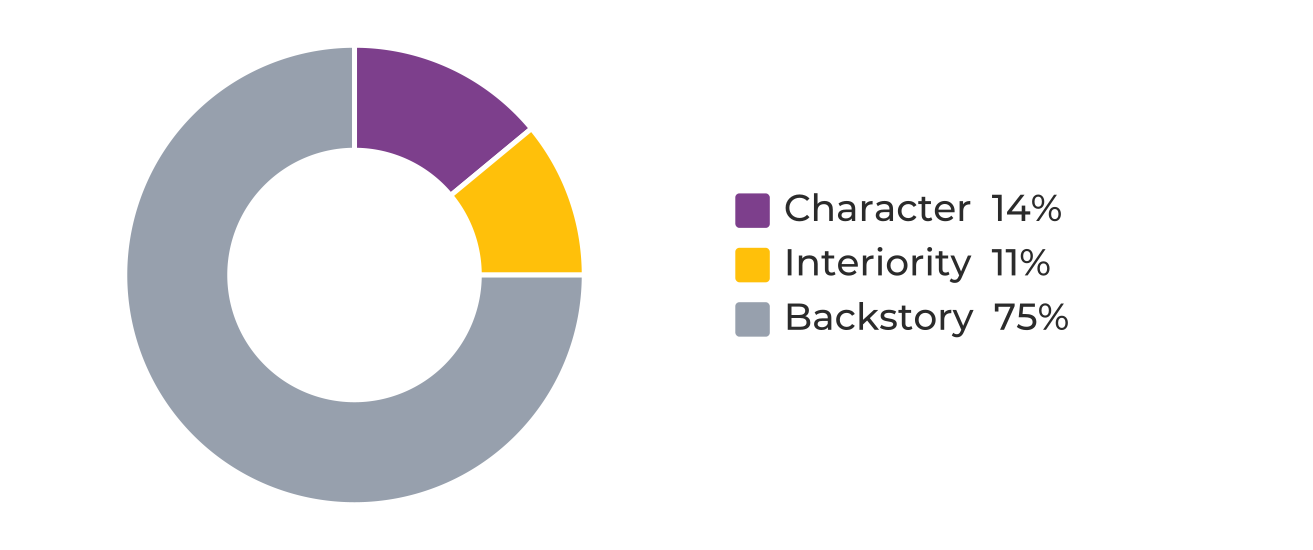
Figure 28: Scene components in What We Can Know, chapter five
Caption: The drama of this scene is entirely located within the mind of the narrator, trying to peer back in time.
Alt text: A donut chart of scene components in chapter five of What We Can Know. Backstory fills three-quarters of the ring at 75 percent, with character description at 14 percent and interiority at 11 percent. There is no dialogue, action, or setting at all—every component in the scene is a telling component.
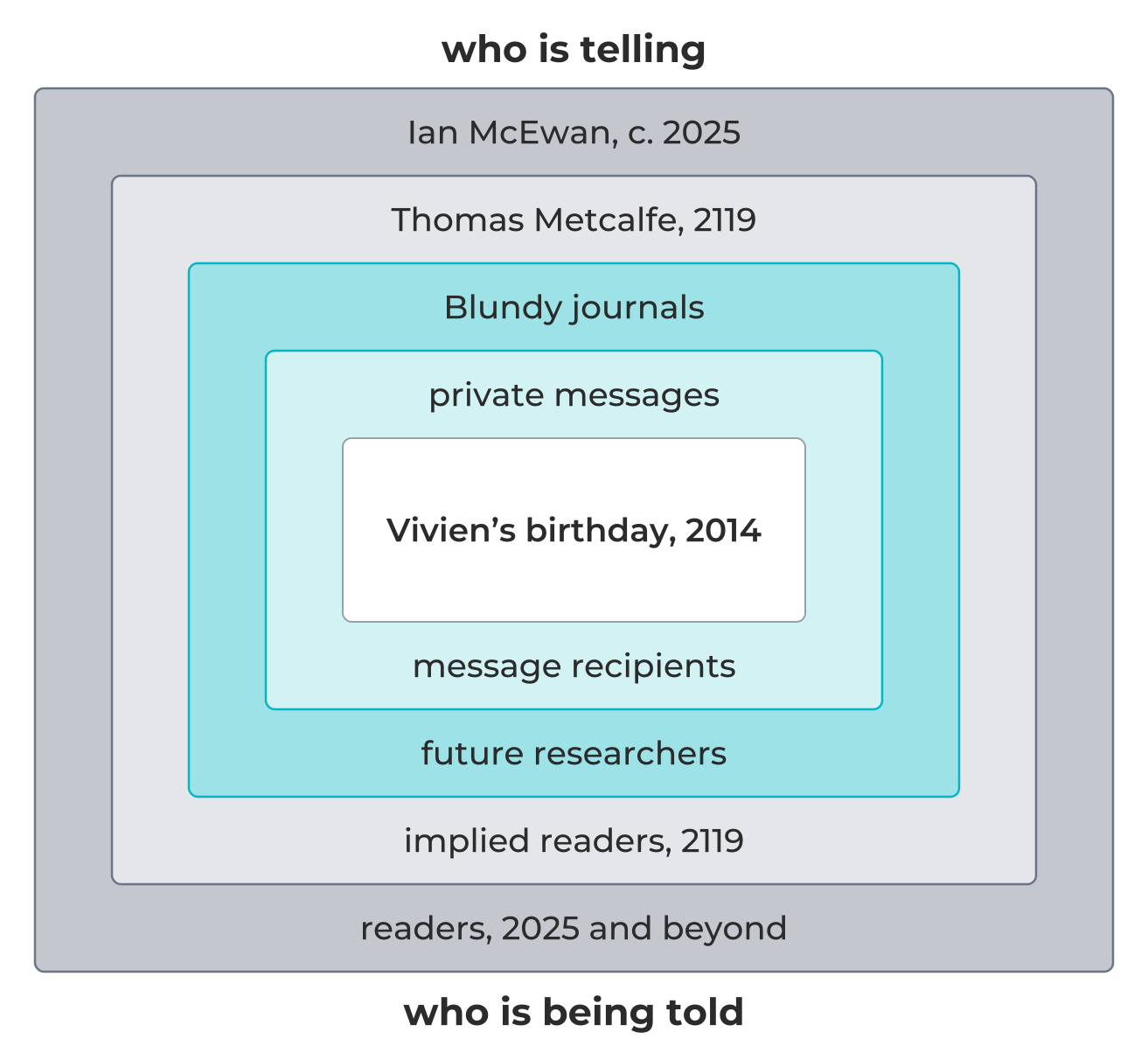
Figure 29: The nested narrative frame of What We Can Know
Caption: Each layer pairs a teller (top) with the audience it addresses (bottom), and the outermost frame is us—McEwan’s present-day readers looking in on a 2119 narrator looking back at 2014.
Alt text: A diagram of nested rectangles showing the narrative frame of What We Can Know, with the innermost box labeled Vivien’s birthday, 2014. Each surrounding layer names a teller along its top edge and the audience it addresses along its bottom edge: private messages told to message recipients, Blundy journals told to future researchers, Thomas Metcalfe in 2119 told to implied readers in 2119, and the outermost layer Ian McEwan, circa 2025, told to readers in 2025 and beyond. The layers move steadily outward and forward in time from the 2014 event, ending with McEwan’s present-day readers looking in on a 2119 narrator looking back at 2014.
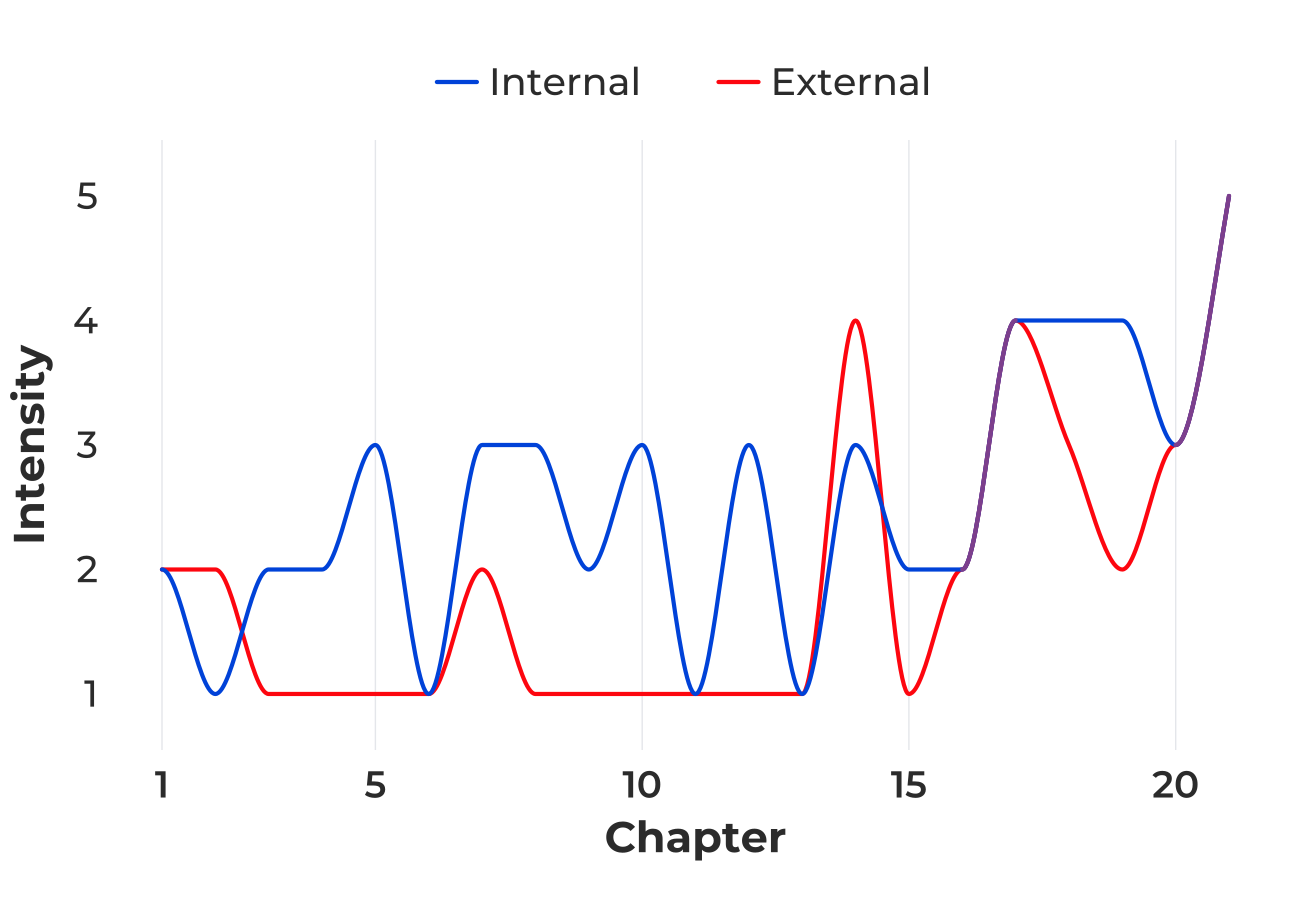
Figure 30: Internal and external intensity in part one of What We Can Know
Caption: Intensity builds slowly until the end of part one.
Alt text: A line graph of internal and external intensity across the 21 chapters of part one of What We Can Know, scored from 1 to 5. The red external line sits at 1 for nearly all of the first thirteen chapters, apart from a small rise to 2 at chapter 7, while the blue internal line oscillates between 1 and 3. Both lines spike at chapter 14, when external intensity first reaches 4, then climb together to 4 at chapter 17 and to 5 at chapter 21. Intensity stays low for the first two-thirds of part one and builds only toward its end.
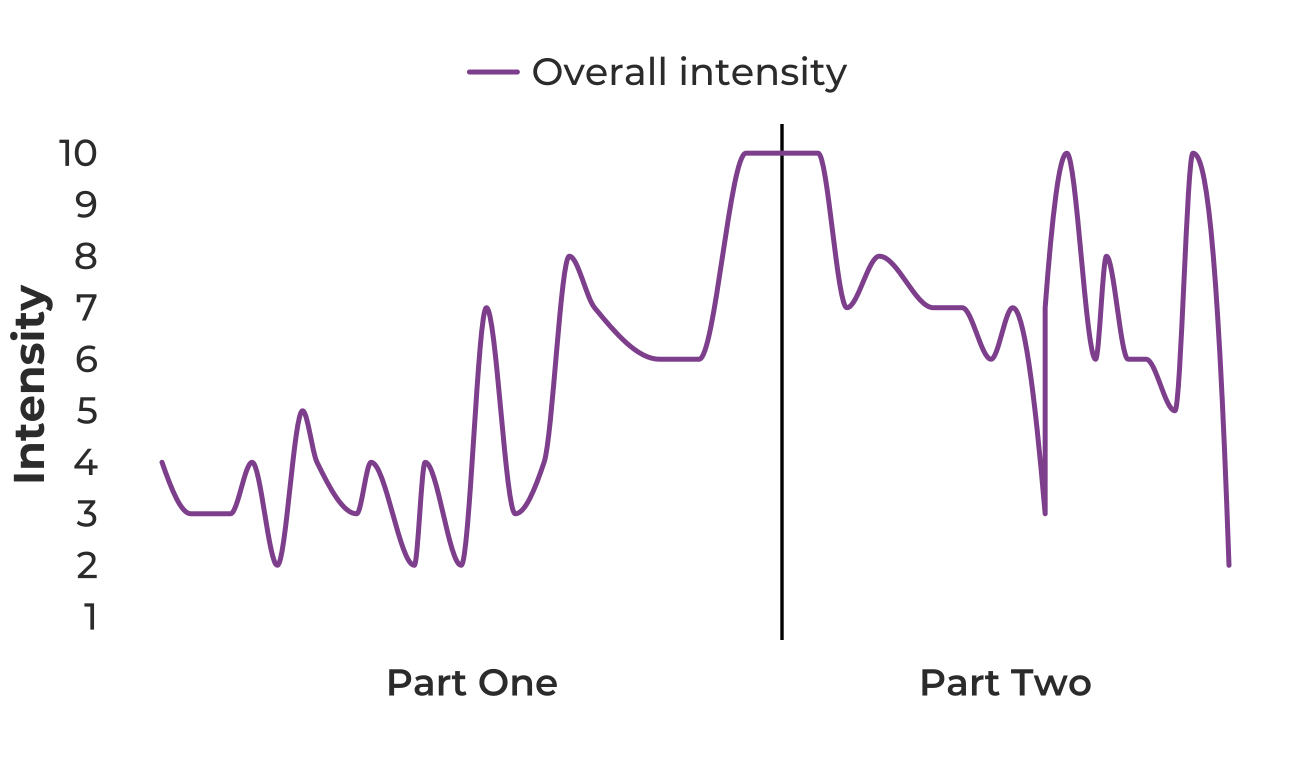
Figure 31: Overall intensity across What We Can Know
Caption: The highest peak sits at the break between parts one and two, then the intensity falls away rather than building.
Alt text: A line graph showing the overall intensity of What We Can Know on a scale of 1 to 10, with a vertical line marking the break between part one and part two. In part one the line hovers between 2 and 5 for a long stretch, climbs through peaks of 7 and 8, and reaches a sustained plateau of 10 that straddles the part break. On the other side of the break the intensity drops to 7, then sawtooths between 5 and 8 with two brief spikes back to 10 before falling to 2 at the very end. The novel’s highest point sits at the part break rather than at the climax, and the intensity falls away after it instead of building.
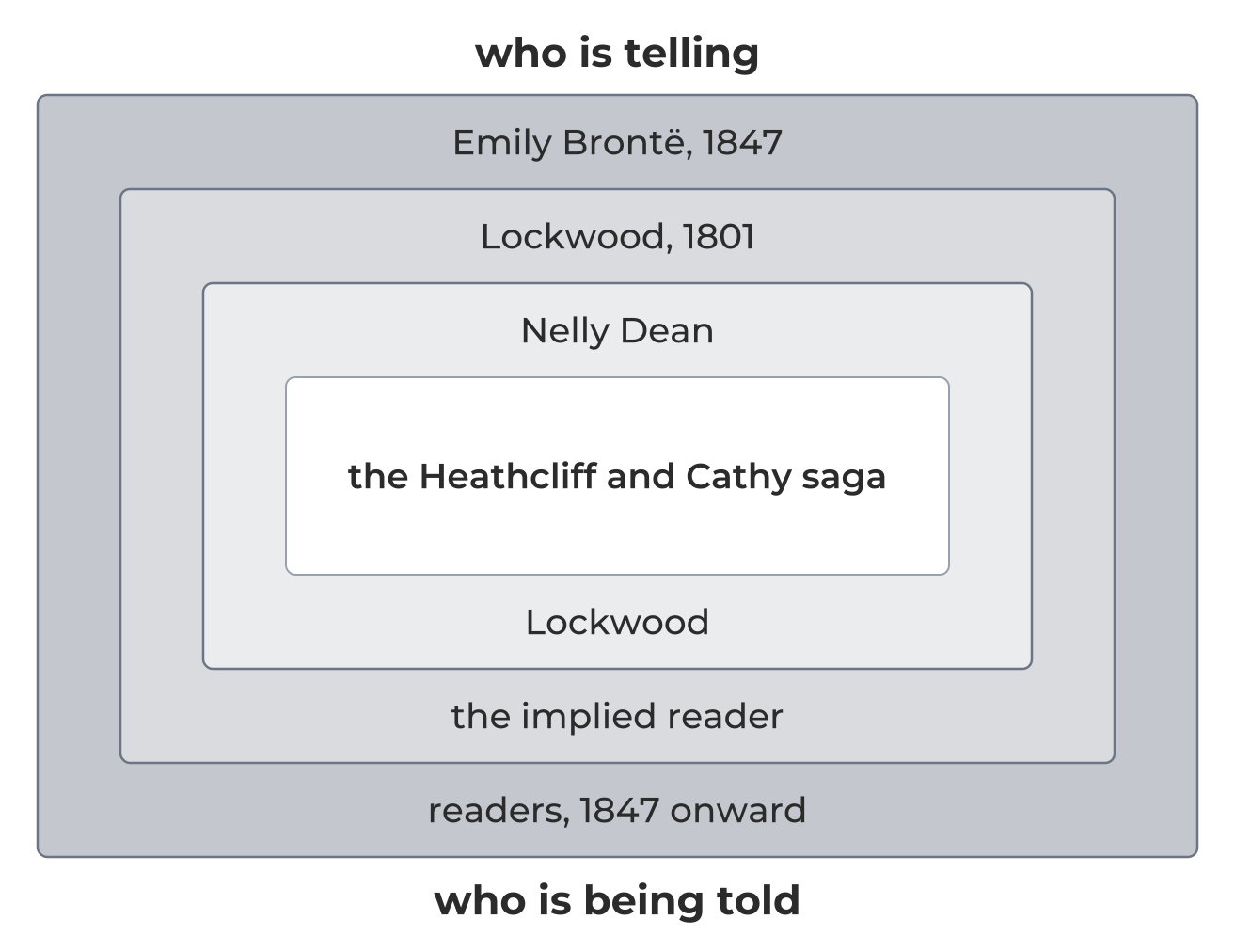
Figure 32: The frame narrative of Wuthering Heights
Caption: Readers can only access the Heathcliff and Cathy saga at third-hand, as told by Nelly to Lockwood.
Alt text: A diagram of nested rectangles showing the frame narrative of Wuthering Heights, with “who is telling” labeled across the top and “who is being told” across the bottom. The outermost layer is Emily Brontë, 1847, telling readers from 1847 onward; inside it, Lockwood in 1801 writes for the implied reader; inside that, Nelly Dean tells her story to Lockwood; and at the very center sits the Heathcliff and Cathy saga. Readers reach the central story only at third hand, filtered through Nelly’s telling and Lockwood’s written account.
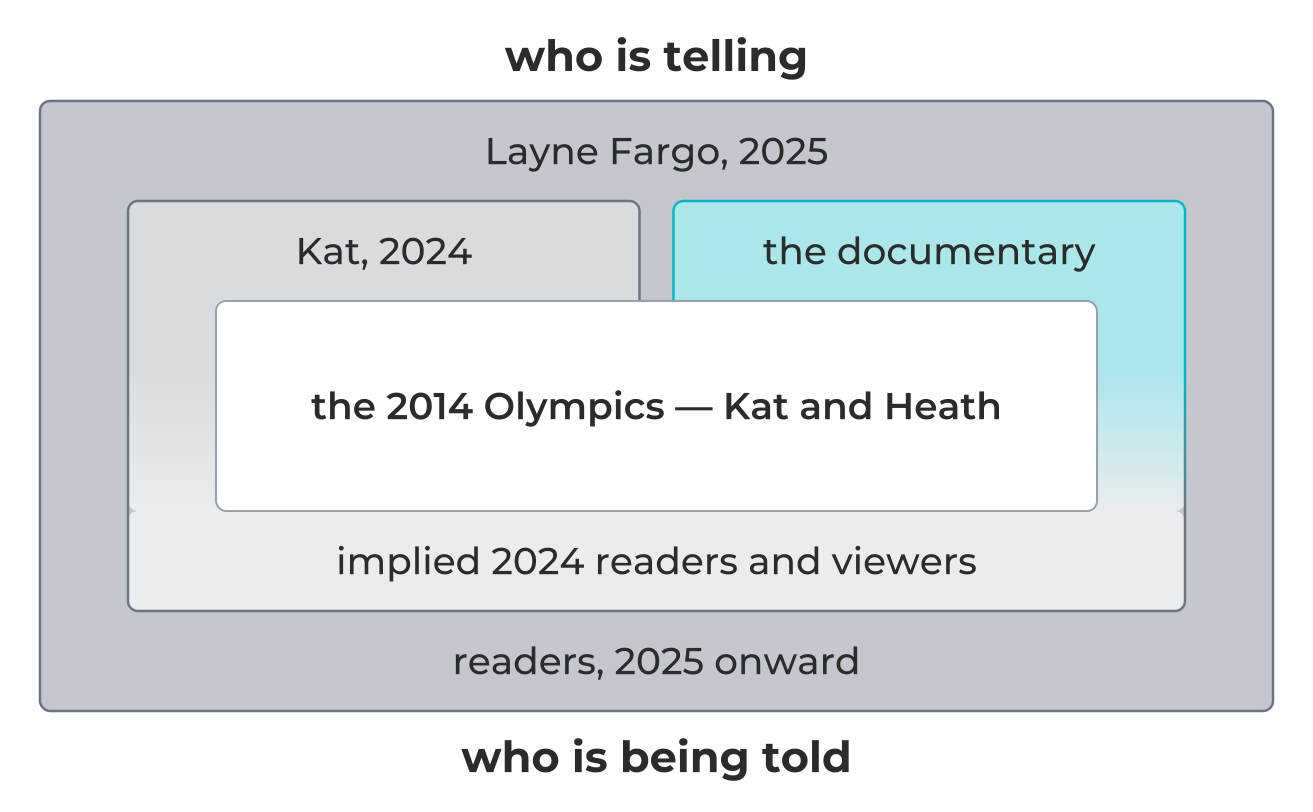
Figure 33: The frame narrative of The Favorites
Caption: Kat’s account and the documentary sit side by side as competing layers around the same events, so the reader has to decide which version to believe.
Alt text: A diagram of nested rectangles showing the frame narrative of The Favorites, with “who is telling” labeled across the top and “who is being told” across the bottom. The outermost layer is Layne Fargo, 2025, addressing readers from 2025 onward. Inside it, two boxes sit side by side rather than one inside the other: Kat’s 2024 narration on the left and the documentary, shaded a contrasting blue, on the right, both addressed to implied 2024 readers and viewers. Overlapping both is the central story, the 2014 Olympics and Kat and Heath, so the reader receives the same events through two competing layers and must decide which to believe.
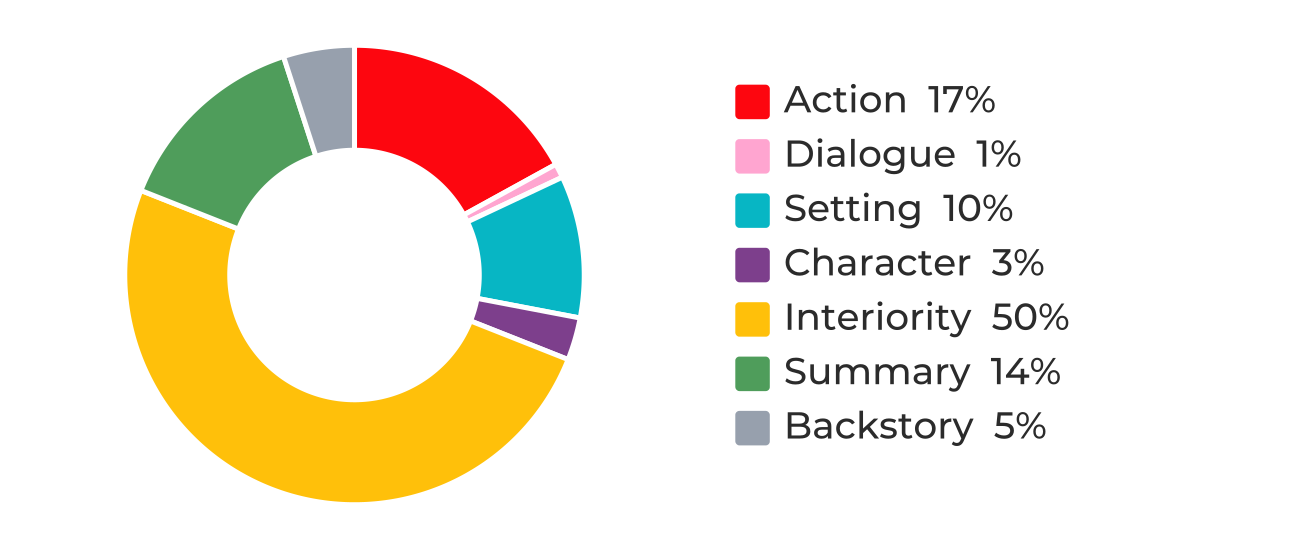
Figure 34: Scene components in The Favorites, chapter eight
Caption: Action and dialogue make up only 18 percent of this high-stakes competition scene—the drama is almost entirely internal.
Alt text: A donut chart showing the proportion of scene components in chapter eight of The Favorites, the novel’s first competition scene. Interiority fills half the ring at 50 percent, followed by action at 17 percent, summary at 14 percent, setting at 10 percent, backstory at 5 percent, character at 3 percent, and dialogue at 1 percent. Action and dialogue together account for less than a fifth of this high-stakes scene, whose drama plays out almost entirely inside Kat’s head.

Figure 35: Scene texture of The Favorites, chapter eight
Caption: Kat’s interiority takes the reader deeply into what it feels like to compete rather than showing us the spins and jumps.
Alt text: A full-page color-coded rendering of chapter eight of The Favorites, in which every word is a dot colored by scene component: red for action, pink for dialogue, blue for setting, purple for character, yellow for interiority, green for summary, and gray for backstory. The chapter is shown as two facing text pages, with letter labels A through N in the margins marking the passages discussed in the text. The opening lines are green summary with a small band of blue setting, followed by a short block of red action; from there yellow interiority dominates both pages, broken by scattered runs of red, blue, and green and a single line of pink dialogue near the end. The rendering shows how much of this competition scene is spent inside Kat’s experience rather than on the physical performance.
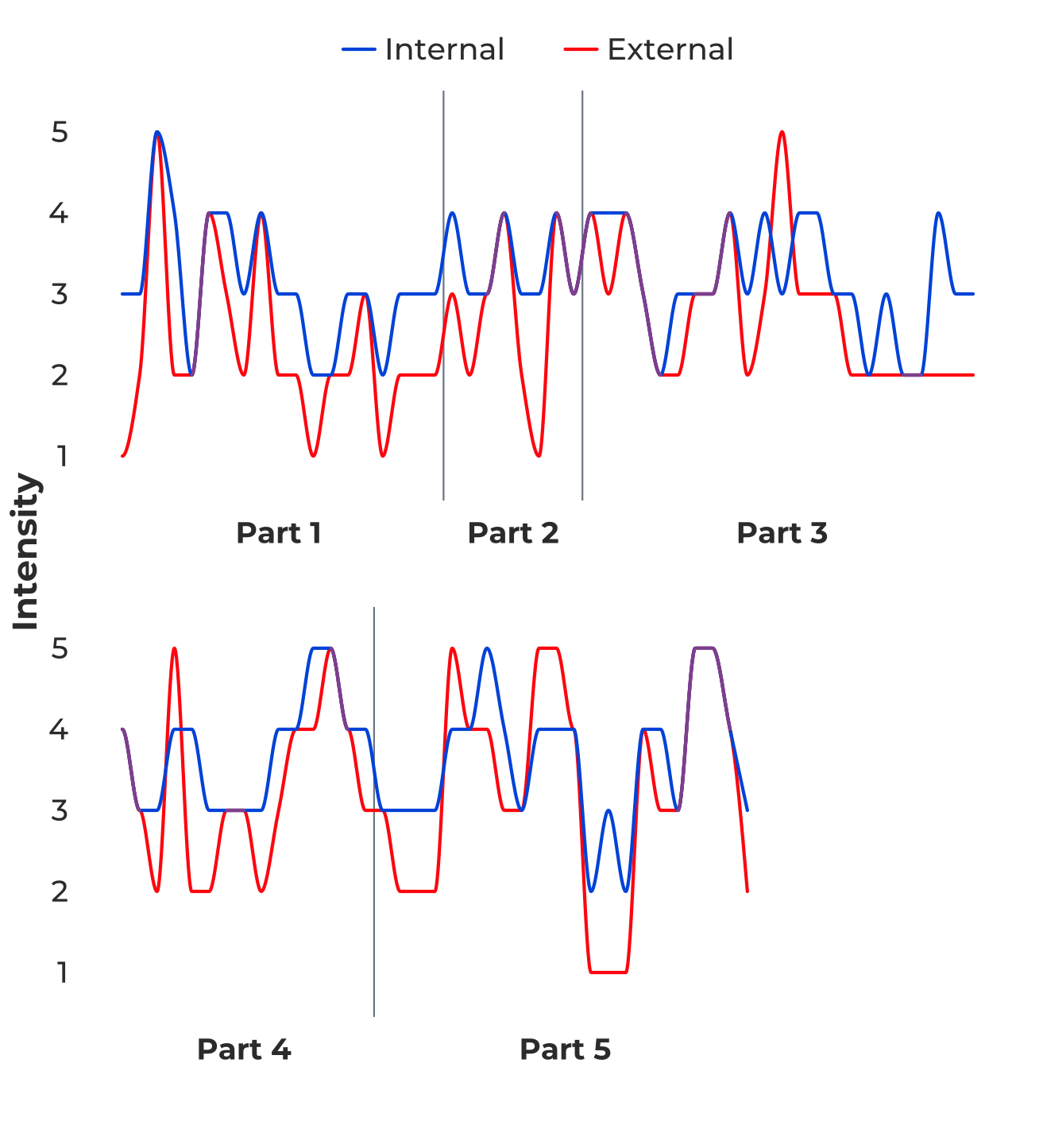
Figure 36: Internal and external intensity across The Favorites
Caption: In every one of the five parts the internal line rides above the external one—Kat’s feelings, not the competitions, set the novel’s pulse.
Alt text: A line graph showing internal and external intensity across The Favorites on a scale of 1 to 5, split into two rows: parts 1 through 3 on top and parts 4 and 5 below, with vertical lines marking the part breaks. The blue internal line and the red external line both spike to 5 at the start of part 1, then settle into a lower middle stretch through parts 2 and 3 where the external line repeatedly drops to 1 or 2 while the internal line rarely falls below 3. In parts 4 and 5 both lines climb again, hitting 5 several times and rising together to a final shared peak of 5 near the end. In every part the internal line rides at or above the external one, so Kat’s emotional experience rather than the competitions sets the novel’s pulse.
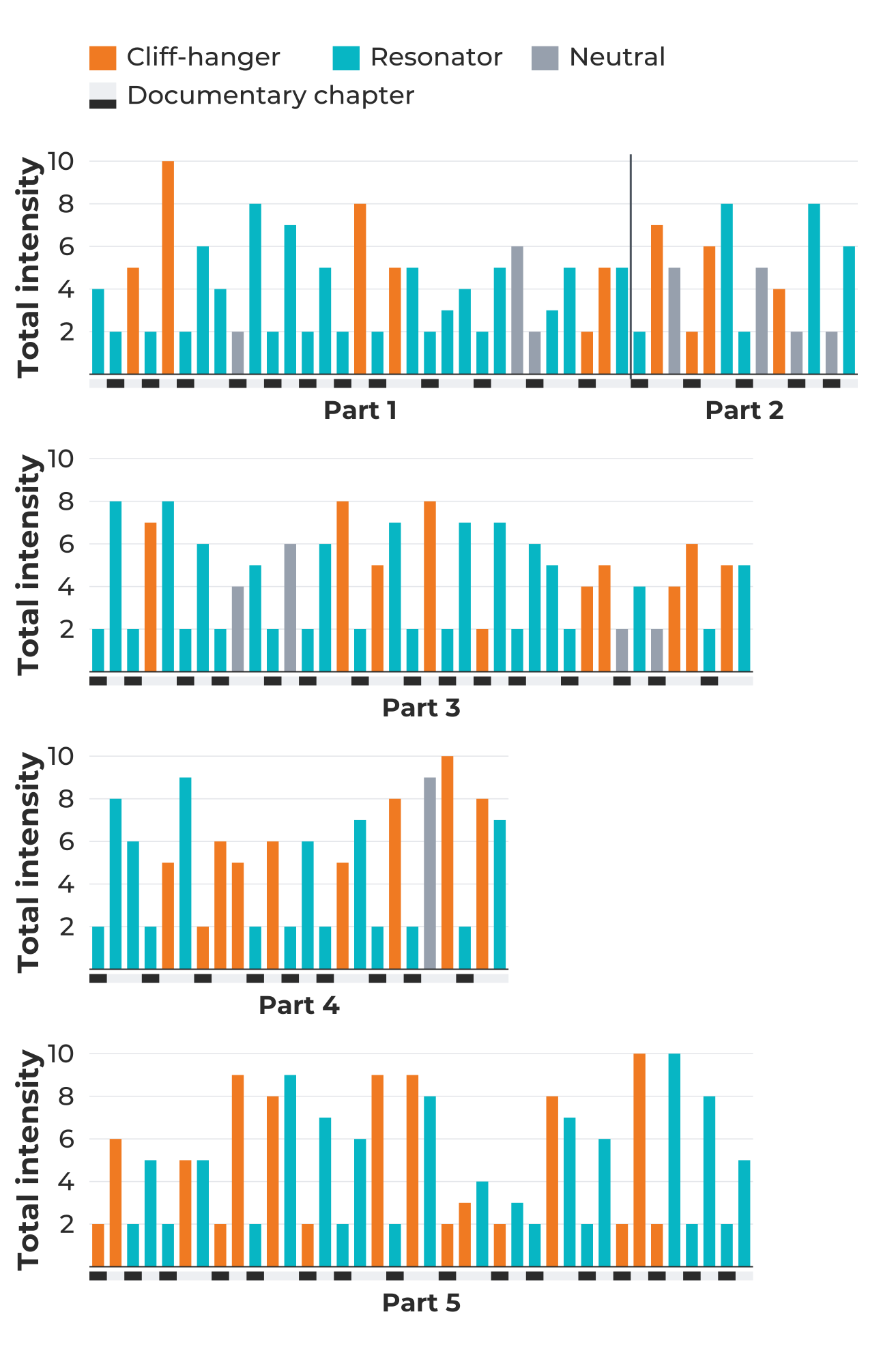
Figure 37: Chapter endings and intensity across The Favorites
Caption: Resonators, not cliff-hangers, are the most common ending in all five parts, and the neutral endings all but disappear after the middle of the book.
Alt text: A bar chart showing total intensity, on a scale of 1 to 10, for every chapter of The Favorites, arranged in four rows: parts 1 and 2 together, then parts 3, 4, and 5 each on their own row. Each bar is colored by ending type—red for cliff-hanger, turquoise for resonator, gray for neutral—and short black marks under the axis flag the documentary chapters, which almost all sit at an intensity of 2. Turquoise resonator bars are the most numerous in every part; red cliff-hanger bars are sparse in parts 1 and 2, more frequent in part 3, and roughly two out of every five bars in parts 4 and 5, where they include several peaks of 9 and 10. Gray neutral bars appear a handful of times in parts 1 through 3, only once in part 4, and not at all in part 5.
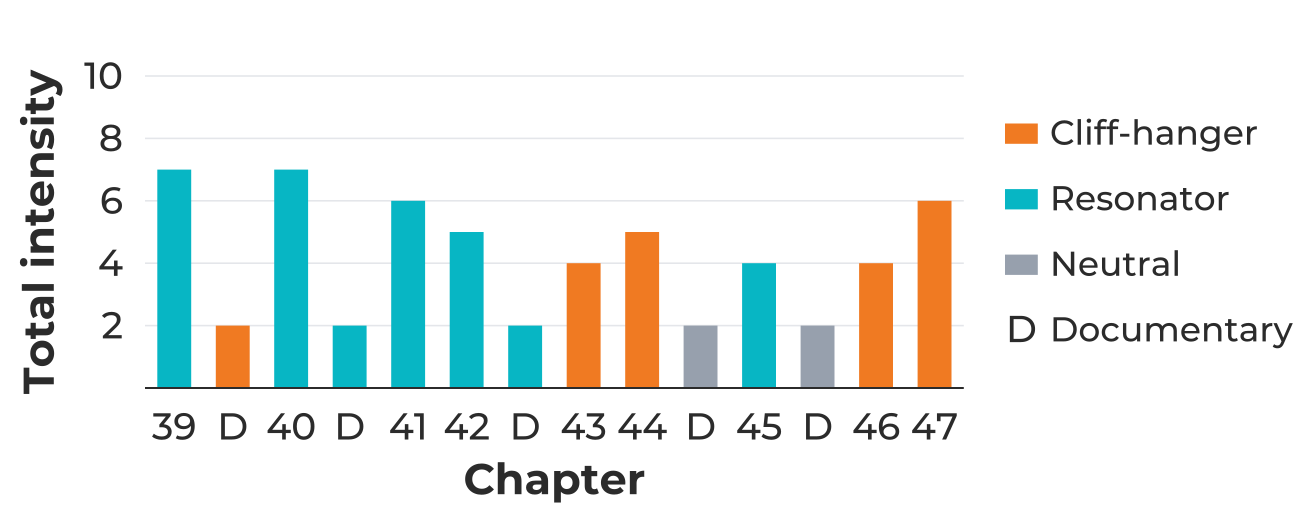
Figure 38: Chapter endings in The Favorites, chapters 39–47
Caption: In this middle stretch of the novel, the quieter resonator endings, not the cliff-hanger jolts, carry the most intensity.
Alt text: A bar chart showing total intensity and ending type for chapters 39 through 47 of The Favorites, with documentary chapters labeled D between them. Bars are colored red for cliff-hanger, turquoise for resonator, and gray for neutral. The highest bars are the turquoise resonators at chapters 39 and 40, each at 7, followed by chapter 41 at 6 and 42 at 5; the red cliff-hangers at chapters 43 and 44 reach only 4 and 5, and the closing pair at 46 and 47 reach 4 and 6. The two gray neutral endings belong to documentary chapters at intensity 2. In this middle stretch the quieter resonator endings carry more intensity than the back-to-back cliff-hangers.
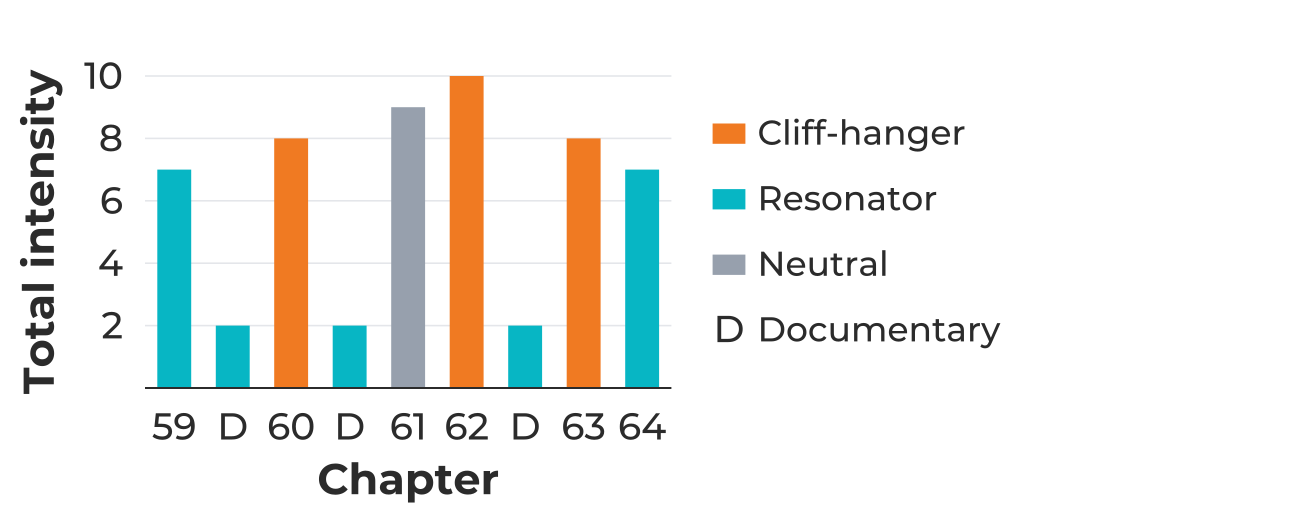
Figure 39: Chapter endings in The Favorites, chapters 59–64
Caption: The rhythm of cliff-hangers followed by resonators in this section follows Bickham’s scene and sequel pattern.
Alt text: A bar chart showing total intensity and ending type for chapters 59 through 64 of The Favorites, with documentary chapters labeled D between them. Bars are colored red for cliff-hanger, turquoise for resonator, and gray for neutral. Chapter 59 opens with a resonator at 7, chapter 60 is a cliff-hanger at 8, chapter 61 a gray neutral ending at 9, chapter 62 the peak cliff-hanger at 10, chapter 63 another cliff-hanger at 8, and chapter 64 closes the part with a resonator at 7, while the three documentary chapters are resonators at 2. The alternation of high-intensity cliff-hangers with resonators traces Bickham’s scene-and-sequel rhythm across the end of part four.
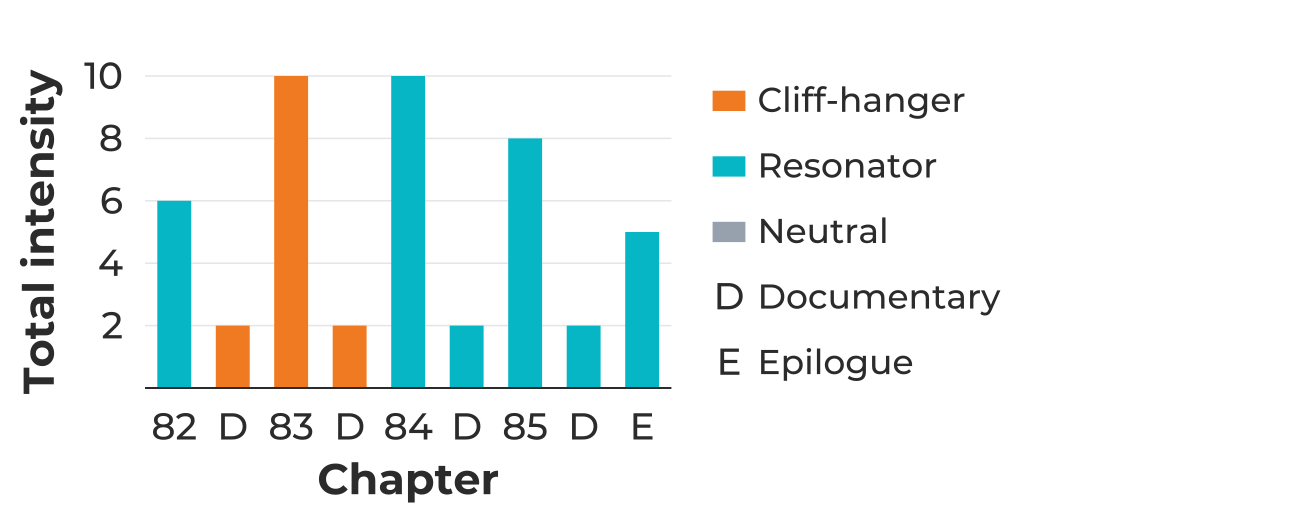
Figure 40: Chapter endings in The Favorites, chapters 82 through the end
Caption: Reserve repeated cliff-hangers for your climax, and end with a resonator.
Alt text: A bar chart showing total intensity and ending type for chapter 82 through the epilogue of The Favorites, with documentary chapters labeled D and the epilogue labeled E. Bars are colored red for cliff-hanger and turquoise for resonator; no neutral endings appear in this stretch. After a resonator at 6 in chapter 82, three red cliff-hangers fall in a row—a documentary chapter at 2, chapter 83 at the maximum of 10, and another documentary chapter at 2—and then every remaining ending is a turquoise resonator: chapter 84 at 10, chapter 85 at 8, the documentary chapters between them at 2, and the epilogue at 5. The novel spends its consecutive cliff-hangers on the Olympic climax and then closes on resonators.
Newsletter
Twice monthly emails full of craft advice and creative encouragement